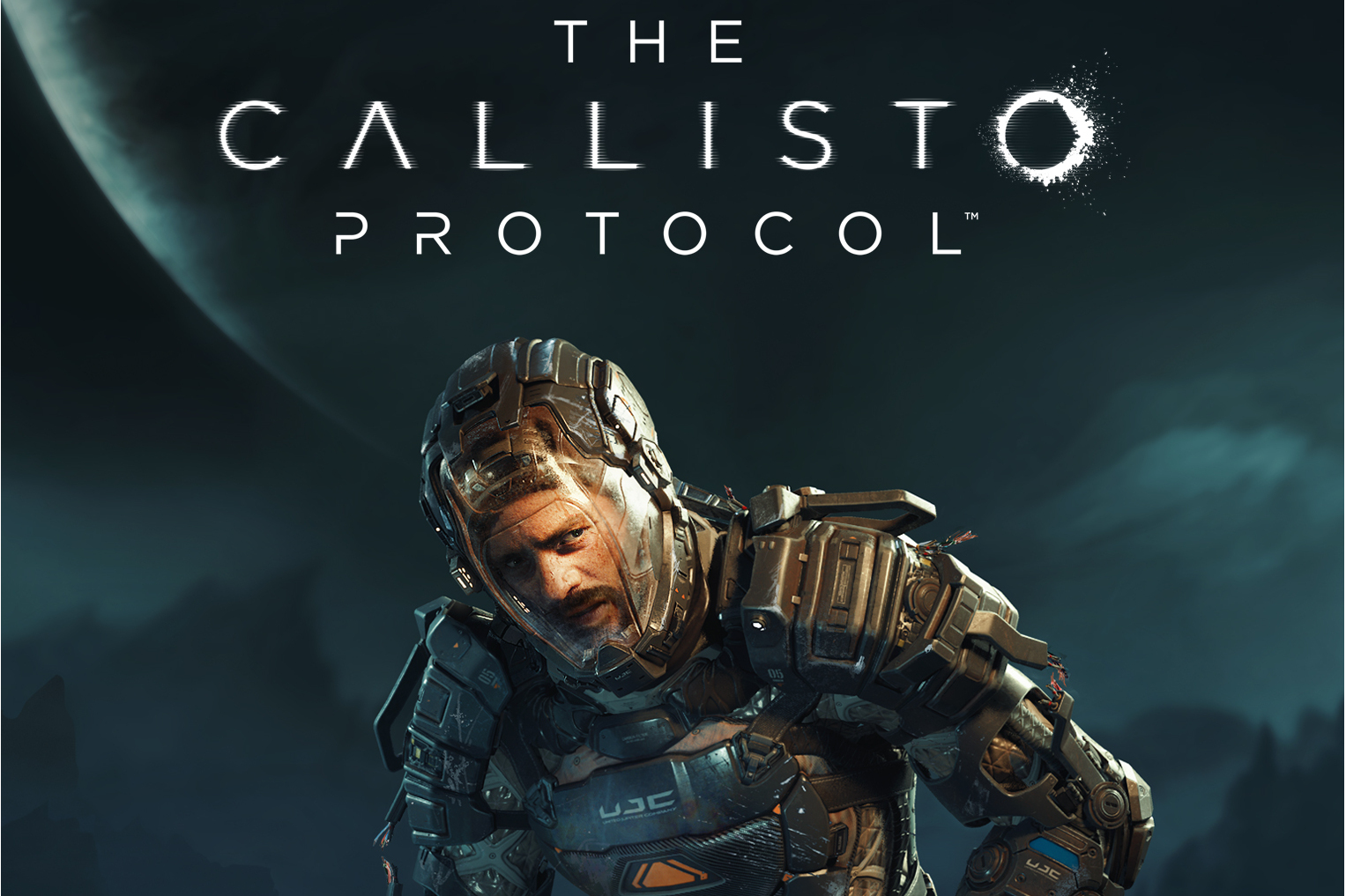
Developed by Striking Distance Studios and published by Krafton, the sci-fi survival horror game The Callisto Protocol launched in December 2022 on PS5, PS4, Xbox Series X|S, Xbox One, and PC. Helmed by Glen Schofield, co-creator of the Dead Space series, the game is set in the year 2320 inside Black Iron Prison, located on Callisto, Jupiter’s second-largest moon. Players assume the role of Jacob Lee, a cargo ship pilot caught in a sudden prison riot that spirals into a biochemical catastrophe far beyond human comprehension. The game received multiple major updates and DLC throughout 2024 and 2025, including the new Hardcore Mode and the story expansion Final Transmission, making the current version mature and stable.
Combat Core: Dodging Is the Only Mandatory Lesson
The combat system of The Callisto Protocol is often compared to that of Dead Space, but the underlying logic of the two is fundamentally different. The core of this game is not dismemberment; it is dodging. The game features a unique “left-right dodge” system — when an enemy swings an attack, you only need to hold the dodge button and push the left stick either left or right, and the character will automatically dodge in the corresponding direction. There is no need to precisely judge attack frames or time invincibility frames; as long as the direction is correct, the dodge will succeed.
The design intent here is clear: to let players focus on positioning and counterattack timing rather than complex frame-perfect inputs. After a successful dodge, the enemy enters a brief stagger window, during which you can swing your Stun Baton to retaliate or raise your GRP (Gravity Restraint Projector) to grab an environmental object and hurl it at the enemy.
For new players, the most critical habit to correct is to avoid mashing the dodge button. Although the dodge system has generous judgment, it has a built-in rhythm limitation — after two consecutive dodges, there is a brief forced cooldown during which you cannot dodge again. If the enemy throws a third consecutive strike, you will be hit and take full damage. The correct approach is: dodge the first attack, dodge the second attack, observe whether the enemy continues to swing — if the enemy pauses to recover, immediately counterattack; if the enemy follows up with a third strike, what you need at that moment is not another dodge, but to raise the Stun Baton to block. Blocking can absorb one hit and push the enemy back, buying you space to retaliate.
GRP Gravity Restraint Projector: Your Strongest Crowd-Control Tool
The GRP is the most underestimated weapon in The Callisto Protocol. Many newcomers treat it as an occasional utility for grabbing objects, but in truth, it is the most effective instant-kill tool. Most combat arenas in the game are lined with environmental hazards — spinning industrial fans, electrified control panels, bottomless chasms, and jagged walls. Using the GRP to grab an enemy and throw them into one of these hazards triggers an instant kill.
The GRP’s battery capacity is limited, and each grab and throw consumes a portion of its charge. Batteries can be found throughout the environment or replenished through upgrades. It is recommended to invest the first GRP upgrade into battery capacity rather than grab range. A larger battery capacity means you can throw two or three enemies consecutively in a single encounter without needing to find a recharge station mid-fight.
The GRP’s role in boss fights is even more specialized. Most bosses cannot be thrown directly, but the GRP can be used to catch projectiles hurled by the boss — such as explosive spores or chunks of debris — and throw them back to deal high damage. In many boss arenas, the environment itself provides ammunition: crates on the floor, metal fragments torn from the walls, and even the corpses of previously killed enemies can all be picked up with the GRP and launched at the boss as weapons.
Weapon Selection and Upgrade Path
Throughout the game, Jacob can wield multiple weapons, including the Stun Baton, the “UJC Special Ops” Hand Cannon, the “Riot Gun” shotgun, the Tactical Pistol, and the “GR-77” Assault Rifle. The Stun Baton is your default melee weapon and remains in your hands from start to finish.
In terms of upgrade priority, the strongest choice is to improve the Stun Baton’s melee damage and combo speed. This may sound counterintuitive — why prioritize a melee weapon in a game with guns? The answer is simple: ammunition is scarce. Ammo supply in the early game is extremely tight, and in the majority of encounters, you will be forced to take down at least half of the enemies with the baton. A fully upgraded Stun Baton with high damage and attack speed ensures that your ammunition reserves remain full when you enter a boss chamber.
Among ranged weapons, the Riot Gun (shotgun) should be the priority for upgrades. The close-range burst damage of the shotgun is irreplaceable for dealing with enemies that suddenly charge into your face; when fully upgraded, a single shot can blow the upper body off a standard Biophage. The Hand Cannon is the second upgrade priority — it is the only tool for precision long-range shots against infectious tentacles and explosive pustules. The GR-77 Assault Rifle can receive moderate magazine size upgrades after you acquire it, but heavy resource investment is not recommended. Its per-shot damage is too low, and it is better used to suppress enemies at mid-range rather than as a primary damage dealer.
Survival Tips for All Chapters
The game is divided into eight chapters. The most treacherous area early on is Chapter 3, “Aftermath” — the first time players face Biophages that swarm in tight corridors. In the sewers, the deadliest threat is not the enemies themselves but the wall behind you. Being cornered by enemies renders your dodge system useless — left-right dodging requires sufficient lateral space, and once your back and sides are blocked, you are forced to absorb every hit. In any narrow area, the first priority is to keep your retreat path open behind you.
In Chapter 4, “Habitat,” you will encounter a special Biophage variant known as the “Blind.” It has no vision but extremely acute hearing. In any area it patrols, running or gunfire will immediately draw it charging toward you. The correct way to deal with a Blind is to crouch-walk, approach from behind, and deliver a fully charged heavy strike with the Stun Baton for an instant execution. If you are detected by a Blind, do not attempt to fight it head-on — its charging attack not only deals massive damage but also cannot be dodged. Immediately use the GRP to grab any nearby object and hurl it at the Blind; upon impact, it will be briefly stunned, giving you time to either create distance or land a finishing blow.
The final chapter’s boss, the mutated commander, is the only endurance fight in the game that requires simultaneous management of both ammunition and positioning. The boss continuously spawns explosive spores across the arena; you must shoot them before they detonate while also dodging the boss’s charging attacks. The core strategy is: use the Riot Gun’s close-range burst damage to counter the boss’s charges, and use the Hand Cannon’s precise shots to clear spores at a distance. Conserve your GRP battery until the boss’s health drops below one-third — at this stage, the boss enters a frenzied state with drastically increased movement speed and attack frequency. Using the GRP to grab environmental explosives and hurl them at the boss is the fastest way to end the fight.