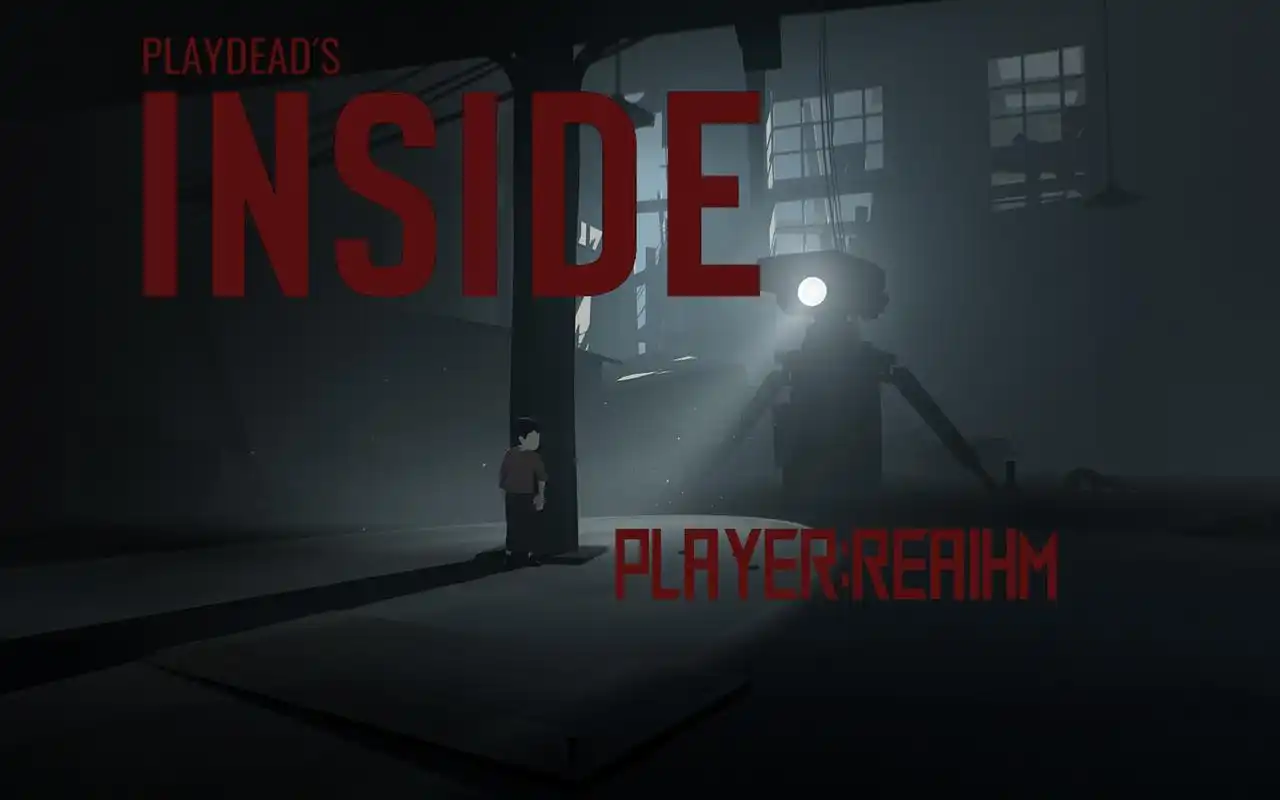
Developed by Playdead and released in 2016, Inside is a side-scrolling puzzle-platformer that follows a nameless boy fleeing through a bleak, industrialized world. Hunted by soldiers, tracking dogs, and mysterious scientists, the boy must navigate through forests, farms, submerged laboratories, and the bowels of a vast, sinister facility. The game contains no dialogue, no text, and no explicit instructions. Every element of the story is communicated through the environment, the character animations, and the increasingly disturbing events that unfold around you. It holds a score of 90 on Metacritic and is widely regarded as one of the most artistically accomplished independent games ever made.
The Language of Silence: How Inside Communicates
Inside operates on a design philosophy of radical restraint. There is no heads-up display, no button prompts, and no narrator explaining the stakes. The game trusts you to understand its mechanics through experimentation and observation. If you see a ledge, the boy can probably grab it. If you see a switch, it can probably be activated. If you see a threat, it will almost certainly kill you if you move too close.
The boy’s movement set is deliberately limited. He can run, jump, climb, and interact with objects. He cannot fight. There is no combat system. Every encounter with a hostile force is a puzzle in which the solution is stealth, timing, or escape. The dogs that pursue you in the early forest sections must be evaded, not fought. The soldiers in the later chapters will shoot on sight, and you must break their line of sight or use environmental cover to survive. This vulnerability is central to the game’s emotional impact. You are not powerful. You are small, hunted, and alone.
Chapter-by-Chapter Puzzle Logic
The game progresses through a series of distinct zones, each with its own visual identity and puzzle types.
The Forest introduces the game’s basic mechanics. You learn to run, jump, climb ledges, and push objects. The threat here comes from dogs and patrolling soldiers. The puzzle logic in this section is spatial: move boxes to reach higher platforms, wait for guards to turn away before crossing open ground, and sprint when you are spotted rather than trying to hide in place.
The Farm escalates the danger. Driving a vehicle through fences and crowds of mind-controlled human workers is the central sequence here, and the puzzle is about momentum management. The vehicle has a limited speed, and you must time your acceleration to break through barriers before you are caught. The pig parasites introduced in this section — small worm-like creatures that force pigs and, later, humans to move in unnatural ways — are the first hint of the body horror that will come to define the game’s later chapters.
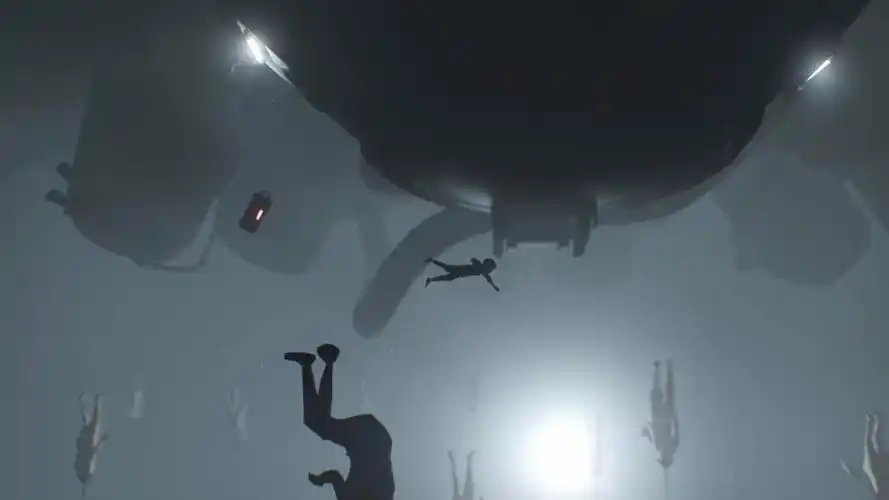
The Underwater Sections shift the puzzle logic from timing to navigation. Submerged corridors require the boy to hold his breath, and the air pockets scattered through the environment are your only source of oxygen. The long-haired creature that pursues you underwater cannot be killed or escaped through speed alone. You must use the environment — closing doors behind you, swimming through narrow gaps that it cannot fit through — to slow its advance.
The Shockwave Tests introduce a new mechanic: a pulse of energy that the boy must ride across vast distances. The timing here is precise but not punishing. The game will show you what is about to happen — a piston fires, a platform drops — before it requires you to react, giving you a split second to prepare.
The Office and Laboratory are the game’s narrative climax. Here, the boy observes scientists performing experiments on human subjects, and the puzzle logic shifts from survival to infiltration. You are no longer running from the facility’s inhabitants; you are moving through them, hiding in plain sight among the mind-controlled workers.
The Final Sequence is Inside‘s most famous moment, and I will describe it here without fully spoiling its impact. The boy merges with a massive organic creature, and the player takes control of a body that is not their own. The puzzle logic of this sequence is deliberately clumsy — the creature moves slowly, its movements are imprecise, and the destruction it causes is almost accidental. The sequence ends with an escape that is as tragic as it is cathartic.
Hidden Collectibles and the Secret Ending
Inside contains fourteen hidden glowing orbs, one in each major section of the game. Collecting all of them unlocks a secret ending that radically reinterprets the entire narrative. The orbs are hidden in locations that require significant deviation from the main path. Some are tucked behind false walls. Others are only reachable by backtracking after solving a puzzle. Several require precise platforming.
The secret ending, accessed by entering a specific code in a hidden bunker beneath the cornfield, reveals a truth that casts everything the player has experienced in a different light. I will not describe it here, because it is best experienced firsthand, but the secret ending transforms Inside from a story about a boy escaping a facility into a story about something far more complex and unsettling.
Thematic Interpretation
Inside is a game about control. The mind-control parasites, the marching lines of shambling workers, the scientists observing from behind glass — all of them represent different forms of coercion. The boy himself is driven by a purpose that is never explained, moving forward with a desperation that feels more programmed than chosen. The game’s final sequence, in which the boy becomes something other than human, asks a question that it refuses to answer: if you escape the system by becoming something the system cannot contain, are you free, or have you simply traded one form of control for another?