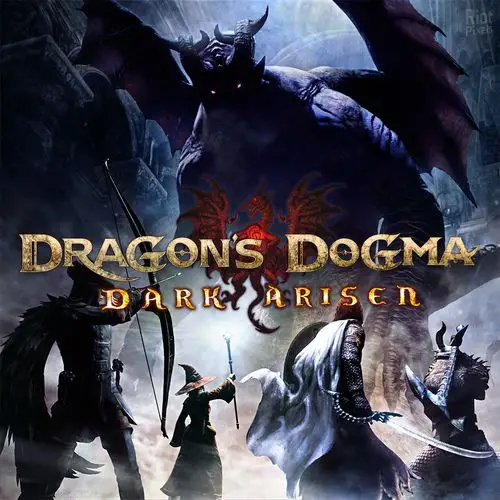
Developed and published by Capcom, Dragon‘s Dogma 2 is an action RPG set in a high-fantasy open world. Players assume the role of the Arisen, a hero whose heart has been stolen by a great dragon. Accompanied by AI-controlled companions known as Pawns, the Arisen journeys across the twin kingdoms of Vermund and Battahl. Released in March 2024, the game has received ongoing updates and remains a popular title in 2026. This guide covers the core systems, progression flow, and essential knowledge for new players.
Character Creation: Appearance Affects Gameplay
Unlike most RPGs, character creation in Dragon’s Dogma 2 has mechanical consequences. The physical build of the Arisen directly influences gameplay parameters. Shorter characters recover stamina faster, while taller characters have a larger inventory capacity. Body weight also affects performance. A character weighing below 50 kilograms has no stamina bonus, with a recovery speed of 100 and a maximum carrying capacity of 40. As weight increases through ranges of 50-69, 70-89, 90-109, and above 110 kilograms, stamina capacity, recovery speed, and carry limits all rise. However, heavier characters consume stamina more quickly when running, climbing, and performing other physical actions. Players are advised to avoid exceeding 69 kilograms to achieve a balanced all-around build.
Players can also choose between the human and beastren races for their Arisen. This choice has no significant impact on the main narrative, though dialogue varies in certain regions.
The Pawn System: Your AI Companions
Pawns form the backbone of party composition. The player directly controls the Arisen and creates one Main Pawn with full customization — including appearance, race, Vocation, and Inclination. The Main Pawn remains with the player throughout the entire game.
The two remaining party slots are filled by Support Pawns recruited from other players through Riftstones scattered across the world. Support Pawns do not level up alongside the Arisen. As the player progresses, these hired Pawns must be periodically replaced with higher-level alternatives to maintain combat effectiveness.
Pawn Inclinations determine their behavior in exploration and combat. A Kindhearted inclination results in more direct and honest dialogue, with the Pawn actively pointing out hidden treasure chests during exploration. A Selfless inclination leads to more compliant and complimentary dialogue, but with reduced exploration assistance. For party composition, a balanced setup of Warrior, Archer, Mage, and Thief is recommended for the early game. Pawns also possess passive skills — the Quest Guide perk is particularly valuable, as it helps locate quest objectives without aimless searching in the open world. Shield Summons is another useful skill that can hold off aggressive enemies, especially beneficial if the Arisen is playing as a Mage.
During combat, Pawns can be issued commands using four keybinds: attack, follow, assist and heal, and hold position.
Vocations and Class Flexibility
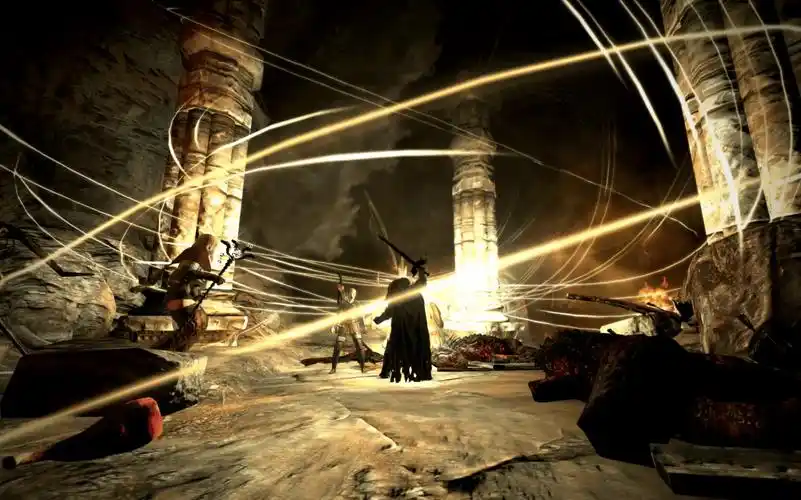
The Vocation system governs the Arisen‘s and Main Pawn’s combat capabilities. The four starting Vocations are Fighter, Archer, Mage, and Thief. Each has distinct strengths: Fighter carries a shield and excels as a frontline tank with high defense at the cost of lower damage output. Archer rewards precision and positioning, offering the highest burst damage in the early game when shots land accurately. Mage provides healing and elemental support. Thief specializes in close-quarters damage and fast movement, with abilities that allow rapid climbing on large enemies.
Vocations can be changed at any time by visiting a Vocation Guild, typically found inside or near inns in major cities such as Vernworth. Switching Vocations is free and there is no penalty for doing so. Certain quests require specific Vocations. For example, in Vernworth, a quest chain tied to the character Glindur can only be initiated if the Arisen is playing as an Archer.
Additional advanced Vocations, including Warrior and Sorcerer, become available later in the game. Players unlock these by completing specific quests and meeting prerequisites in the Vocation Guild.
The Save System and Inn Rests
The save system in Dragon‘s Dogma 2 is deliberately restrictive. Players can only maintain one save file at a time, meaning only one character and playthrough can exist simultaneously. To start a new game, save data must be manually deleted.
There are technically two save slots within the single-character system. The first is the standard save, which includes manual saves and autosaves triggered by the game. The second is the Inn Save, which is only updated when the player rests at an inn or in a personally owned house. The Inn Save functions as a checkpoint that can be reloaded independently. Players should rest at an inn before attempting quests with failure conditions or significant narrative choices. If the quest goes poorly, the Inn Save can be reloaded from the title screen without losing permanent progress.
Exploration, Travel, and Survival
The open world of Dragon’s Dogma 2 spans two major kingdoms, and travel between locations is deliberately challenging. Fast travel is limited and requires the use of rare consumable items. The primary form of long-distance travel is the oxcart system, which operates on fixed routes between cities and major villages. Oxcarts travel in real time and can be ambushed by enemies during transit.
Resting restores health and refreshes the party. Camping in the wilderness is possible with a camping kit but only at designated campfire locations. Camping restores health and allows the preparation of cooked meals using gathered ingredients, which provide temporary stat bonuses. Inns offer the most complete recovery, restoring both health and the loss gauge, but cost gold.
Exploration at night is considerably more dangerous than during the day. Enemy encounters increase in frequency and difficulty after dark, and visibility is severely limited by the lack of light sources. The Lantern is an essential piece of equipment that must be periodically refilled with oil. New players are advised to explore primarily during daylight hours in the early stages of the game.
Item Management and Recovery
Healing in Dragon‘s Dogma 2 is not instantaneous. Recovery items restore health over time, and the loss gauge represents a portion of health that cannot be healed by standard means. Resting at an inn or a campfire restores the loss gauge fully. Consumables have weight, and carrying too many items will encumber the character. Materials collected from defeated enemies and gathered from the environment should be stored at inns rather than carried, as they are used for equipment upgrades.
Upgrade materials should not be sold. While the initial tier of equipment upgrades costs only gold, subsequent tiers require rare resources. Players are advised to store all upgrade materials at inns even if they have no immediate use for them. Weapon upgrades are performed by blacksmiths, and different smiths offer unique upgrade paths.
Progression and Endgame
The main narrative takes players from Vernworth, the capital of Vermund, through the desert kingdom of Battahl and beyond. Side quests are distributed throughout the world and often feature multiple resolution paths. Many quests are timed or have fail conditions, so players should complete them promptly once accepted.
After completing the main story, players enter the Unmoored World, a post-game state that significantly alters the world and introduces new, more challenging enemies. This endgame phase offers the highest-tier equipment, additional boss encounters, and expanded exploration opportunities. The game encourages multiple playthroughs through its New Game Plus mode, which carries over character progression and equipment.