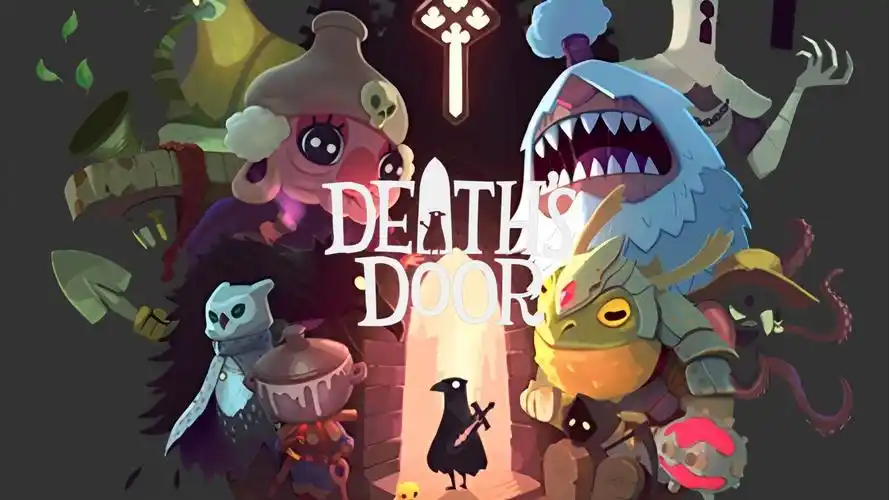
Developed by Acid Nerve and published by Devolver Digital, Death’s Door is a top-down action-adventure game released in 2021. You play as a small crow employed by the Reaping Commission, a bureaucratic organization responsible for collecting the souls of the dead. Your job is monotonous and uneventful until a routine assignment goes wrong — a soul you are supposed to collect is stolen by a mysterious figure, and your pursuit of the thief leads you into a world far larger and stranger than the grey office halls where your story began. The game blends tight, responsive combat with a melancholic narrative about mortality, purpose, and the systems we build to make sense of both.
Combat Fundamentals and Weapon Choices
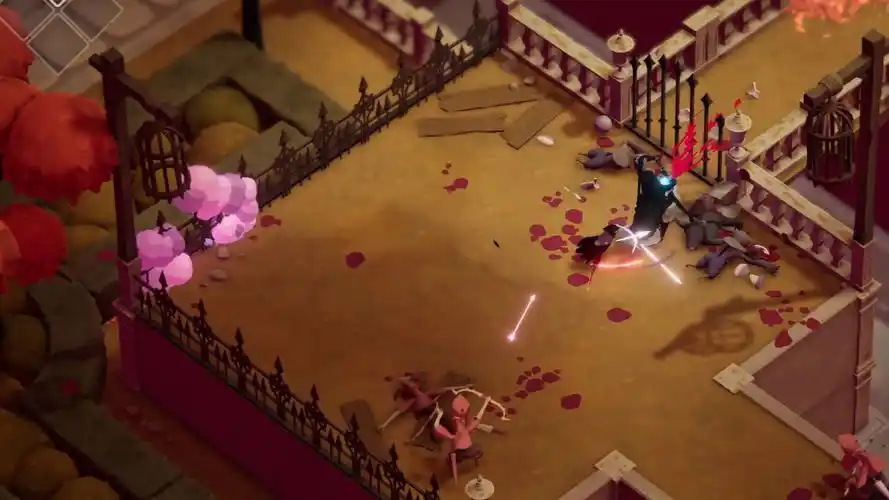
Combat in Death’s Door is fast-paced and melee-focused. The crow’s basic moveset consists of a light attack combo, a heavy charged attack, a dodge roll, and a bow for ranged attacks. There is no stamina meter, which means you can attack and dodge freely without managing a resource bar. The constraint on combat is timing — enemies attack quickly, and healing opportunities are limited.
The dodge roll is the cornerstone of survival. It provides a generous window of invincibility and can be used to pass directly through enemy attacks. Rolling toward an enemy rather than away from them will position you behind their guard, where you can land a full combo before they turn to face you. Most enemies can be defeated by repeatedly rolling through their attacks and striking their backs.
The charged heavy attack is slower than the light combo but deals significantly more damage and can break the guard of shielded enemies. It also has a longer reach, making it useful for striking enemies that are just outside of light attack range. The charged attack can be released early for a quicker strike with less damage, or held until it flashes for maximum impact.
Ranged combat is handled through a bow that the crow can fire at any time. The bow consumes arrows, which are finite but can be replenished by striking enemies with melee attacks. This creates a rhythm: use the bow to soften enemies at range, close the distance with melee attacks to restore arrows, then retreat and repeat. The bow is also used to solve environmental puzzles, such as hitting distant switches or triggering explosive barrels.
The game features five melee weapons, each with distinct properties. The starting weapon is the Reaper’s Sword, a balanced blade with moderate speed and damage. The Rogue Daggers are the fastest weapons, dealing rapid strikes with lower individual damage. The Greatsword is the slowest but most powerful, capable of staggering most enemies in a single charged hit. The Thunder Hammer deals area-of-effect damage with every swing. The Umbrella is a joke weapon that deals minimal damage — using it for an entire playthrough is a challenge run, not a standard strategy. Weapons can be upgraded at the hub area using soul energy collected from defeated enemies.
Magic abilities are unlocked by defeating specific bosses and are tied to Spells that can be equipped and used at any time. The Flame Spell sets enemies on fire, dealing damage over time. The Bomb Spell creates a delayed explosion that deals massive damage. The Hookshot Spell pulls the crow toward enemies or environmental anchors. The Arrow Spell fires a rapid volley of magical projectiles. Spells consume magic points, which regenerate slowly over time.
Boss Strategies for Key Encounters
Death’s Door features a series of major boss encounters, each with a distinct arena and attack pattern. The bosses are designed to test specific skills, and approaching them with the right strategy makes a significant difference.
The Guardian of the Door is the first major boss and serves as a skill check for basic combat. It attacks with sweeping claw strikes and a charging lunge. The claw strikes can be rolled through. The lunge must be dodged to the side. Between its attacks, the Guardian pauses briefly, giving you a window for one or two strikes before it resumes its assault. Do not get greedy — landing two hits and retreating is safer than going for a third and taking damage. There are destructible objects in the arena that contain health pickups; save them for the second half of the fight when the boss becomes more aggressive.
The Frog King is a two-phase encounter in a flooded arena. The first phase involves dodging the King’s tongue attacks and ground pounds while avoiding smaller frogs that swarm the arena. Use the bow to eliminate the smaller frogs from a distance, then close in on the King when it is isolated. The second phase introduces a new attack: the King leaps into the air and crashes down, creating shockwaves that must be jumped over. The timing of the jump is generous, and the King is vulnerable immediately after landing.
Grandma is a spider-like boss fought in a vertical arena with multiple levels. She attacks with web projectiles, sweeping leg strikes, and a charge. The web projectiles can be destroyed with the bow before they reach you. The leg strikes cover a wide area and must be dodged, not blocked. The key to this fight is positioning — stay on the opposite side of the arena from Grandma to give yourself maximum time to react to her charges. Use the Flame Spell to deal passive damage while you focus on dodging.
The Final Boss is a multi-phase encounter that tests every skill the game has taught you. The first phase involves a direct confrontation with the Lord of Doors. The second phase shifts to a battle against a massive, corrupted being. The final phase is a desperate fight for survival while the arena crumbles around you. The bow is essential in the second phase, as the boss’s attacks cover too much area to safely close to melee range. The Hookshot Spell can be used to quickly close the distance when an opening appears.
Hidden Collectibles and the True Ending
Death’s Door has a true ending that can only be unlocked by completing a series of optional objectives. After the credits roll on the standard ending, the player is returned to the hub area, where a new door has appeared. Entering this door reveals the true nature of the world and sets the player on a quest to collect seven Tablets of Knowledge, each hidden in a different area of the map.
The Tablets are guarded by environmental puzzles and optional combat challenges. One Tablet is hidden behind a series of invisible platforms that must be navigated by observing subtle visual cues. Another requires the player to extinguish a sequence of torches in a specific order, a puzzle that can only be solved by finding a clue hidden in the environment. A third Tablet is located in a secret area that can only be reached by using the Hookshot Spell on an anchor point that is hidden off-screen.
In addition to the Tablets, the true ending requires the player to find all Shiny Things — small collectibles scattered throughout the world. Shiny Things are often hidden in corners of rooms, behind breakable objects, or at the end of optional platforming challenges. Collecting all of them rewards the player with a key item needed to unlock the final door.
The true ending sequence recontextualizes the entire story of Death’s Door. Without spoiling its contents, the true ending reveals the nature of the Reaping Commission, the origin of the doors between worlds, and the true identity of the crow. It is a quiet, contemplative conclusion that reframes the game’s themes of mortality and duty.
Upgrade Priorities and Exploration Tips
When spending soul energy to upgrade abilities, prioritize Speed and Strength first. Speed increases your movement and attack rate, making it easier to dodge and punish enemy openings. Strength increases your damage output, shortening fights and reducing the number of attacks you must survive. Magic upgrades should come third, and Health upgrades last — learning to avoid damage is more valuable than being able to absorb more of it.
Exploration in Death’s Door is loosely guided, and many areas contain hidden rooms and optional paths that are not marked on the map. The map itself is a diagrammatic representation that does not show precise layouts, and the player is encouraged to explore thoroughly. Breakable walls are indicated by cracks in the stone. Hidden passages are often concealed behind foreground objects. If an area seems to end abruptly, walk around the edges and look for gaps that your character can fit through.
The game’s world is interconnected. Shortcuts between areas can be unlocked by approaching gates and barriers from the opposite side, and backtracking with new abilities will reveal paths that were previously inaccessible. After acquiring the Hookshot Spell, revisit earlier areas to find hidden collectibles and optional challenges that were out of reach before.
Death’s Door is a game about death, but it is not a game about despair. The crow’s journey is one of quiet persistence, and the game’s ending — whichever one you reach — honors that persistence in a way that feels earned.