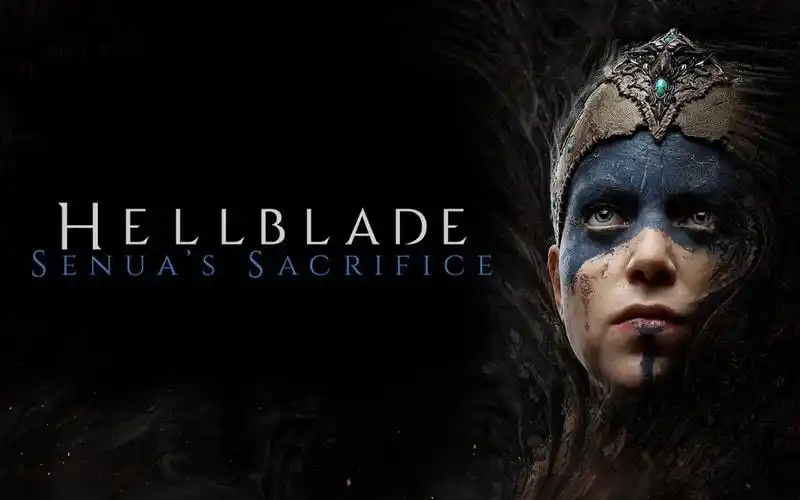
Developed by Ninja Theory and released in 2017, Hellblade: Senua’s Sacrifice is a third-person action adventure that follows Senua, a Pict warrior from the Orkney Islands, as she journeys into a nightmarish vision of the Viking underworld to rescue the soul of her dead lover, Dillion. The game is a collaboration with neuroscientists and people with lived experience of psychosis, and its defining feature is its depiction of Senua’s mental state — the voices she hears, the visions she sees, and the beliefs she holds — as an integral part of both the narrative and the gameplay. The voices that whisper to Senua are not merely a storytelling device; they function as a gameplay mechanic, offering warnings, encouragement, or discouragement in combat and exploration. The game demands to be played with headphones, as the binaural audio is essential to the experience.
Combat System and Core Mechanics
Combat in Hellblade is melee-focused and deliberately limited in scope. Senua carries a sword, and her moveset consists of light attacks, heavy attacks, a dodge, a block, and a parry. There are no skill trees, no weapon upgrades, and no combo meters. The combat is designed to feel desperate and personal rather than empowering. Every fight is a one-on-one duel or a small-scale skirmish against two or three enemies at most. Senua is not a superhero; she is a woman driven by grief and rage, and the combat reflects this vulnerability.
The most important combat mechanic is the parry and block system. Senua’s sword can block most incoming attacks, but blocking consumes stamina. If her stamina is depleted, she will be stunned and vulnerable. The parry — executed by pressing the block button at the precise moment an attack lands — staggers the enemy and opens them up for a counterattack. Parries are essential for defeating the game’s tougher enemies, particularly the shielded warriors and the heavily armored chieftains.
A unique feature of the combat is the voice mechanic. The voices Senua hears — referred to in the game’s credits as the Furies — provide real-time audio cues during combat. They may warn Senua when an enemy is attacking from behind, or urge her to dodge when a heavy strike is incoming. These cues are not always reliable; the Furies are as prone to panic and misdirection as any person would be. Learning to trust the voices when they are helpful and ignore them when they are harmful is one of the game’s most subtle challenges.
The focus mechanic is Senua’s primary offensive tool. As she lands hits and avoids damage, a mirror shard on the left side of the screen gradually fills. When it is full, Senua can activate focus mode, which slows time and allows her to deliver a rapid flurry of unstoppable attacks. Focus mode is best saved for elite enemies and the final moments of boss encounters, as it takes time to recharge.
The game features several major boss encounters, each of which tests a different combination of combat skills. Surtr, the fire giant, is an unblockable threat — his attacks must be dodged rather than parried, and the fight emphasizes positioning and patience over aggression. Valravn, the raven god, is the opposite — his attacks are fast and must be parried to create openings. The final encounter, against Hela herself, is a gauntlet of increasingly difficult waves of enemies that must be survived rather than won.
Rune Door Puzzles and Environmental Logic
The game’s primary puzzle mechanic involves rune doors — large stone gates marked with a specific runic symbol that must be found in the environment to unlock the door. The symbol is always hidden somewhere in the surrounding area, integrated into the geometry of the world. A tree branch against the sky might form the shape of the rune. A shadow cast by a broken wall at a specific angle might reveal it. A crack in the floor, a pattern of rust on a gate, or the alignment of distant rock formations might all contain the key.
The logic of these puzzles is consistent: the rune is always visible from a specific vantage point, and you must find that vantage point. Move through the area slowly and look at the environment from multiple angles. Senua’s focus ability can be activated near rune doors to reveal a faint outline of the symbol you are searching for, which helps narrow down the shape you need to find.
The puzzles are not designed to be difficult in a traditional sense. They are designed to train the player to see the world the way Senua sees it — to find patterns and meaning in random shapes, to trust that there is significance hidden in the mundane. This is, of course, exactly how psychosis operates, and the rune puzzles are a mechanical representation of Senua’s cognitive experience.
Lorestone Locations and Their Significance
Scattered throughout the game are Lorestones — standing stones carved with runes that, when focused upon, trigger narrated stories from Norse mythology. There are forty-four Lorestones in total, and collecting all of them extends the game’s ending with an additional scene.
The Lorestones are divided into two categories: those that recount the myths of the Norse gods, and those that recount the story of a warrior named Druth, a former slave of the Vikings who escaped and returned to the Picts with knowledge of their language and religion. Druth’s stories, narrated by an older male voice, provide the narrative framework for Senua’s journey — she is retracing the path through Helheim that Druth described to her before his death.
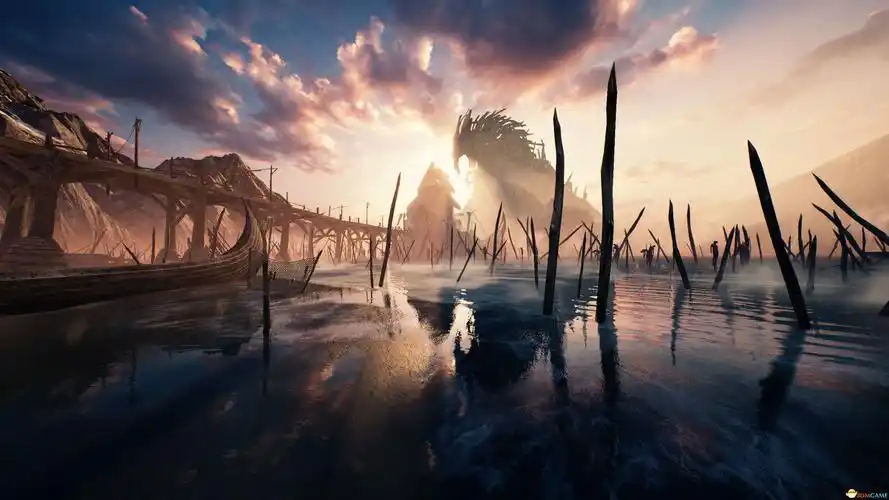
Key Lorestone locations include several near Valravn’s area, hidden behind a waterfall accessible by backtracking after solving a rune door, and others near Surtr’s domain, tucked into the shadow of a collapsed bridge. The final set of Lorestones is located in the Sea of Corpses, just before the bridge to Hela’s Sanctum. Collecting them all triggers a brief, wordless cutscene that recontextualizes the game’s final moments.
The Druth Lorestones are essential to understanding Senua’s motivation. Druth was a survivor of unimaginable cruelty, and his tales of the Northmen’s gods gave Senua a framework for understanding her own suffering. By walking the same path Druth described, Senua is transforming her personal grief into something with the shape and weight of myth.
The Permadeath Deception
Hellblade famously warns the player at the beginning of the game that if Senua dies too many times, the dark rot spreading up her arm will reach her head, and her save file will be deleted. This warning is not true. The rot will spread, but it will never reach Senua’s head, and the save file will never be deleted. The mechanic is a narrative device designed to make the player feel Senua’s fear of death and failure viscerally. The developers have confirmed in interviews that the permadeath threat is a bluff, but it is a bluff that many players have reported feeling genuinely anxious about throughout the game.
This deception is consistent with the game’s larger project: to make the player experience, in a limited and controlled way, the kind of distorted reality that Senua inhabits full-time. If you believe the rot will kill you, then every death carries an extra layer of dread, just as every voice Senua hears carries an extra layer of meaning that may or may not be real.
Ending Interpretation
The game’s ending is deliberately ambiguous. Senua reaches Hela’s Sanctum and confronts the goddess of death, only to discover that Hela cannot be defeated in combat. The final sequence is not a boss fight but an act of acceptance. Senua realizes that she cannot bring Dillion back, and that her journey into Helheim was not about rescuing him — it was about letting him go.
The voices that have accompanied Senua throughout the game fall silent for the first time during this sequence. In the silence, Senua speaks to Dillion directly, telling him that she is sorry, that she loved him, and that she must continue to live. The scene is a catharsis not of victory, but of release.
If you have collected all the Lorestones, an additional scene plays after the credits. Senua is shown walking away from Hela’s Sanctum, and the camera pulls back to reveal that she is not alone. The spirits of those who have guided her — including Druth — walk beside her in silence. The implication is that Senua has integrated her experiences, her voices, and her grief into a coherent self, and that she will carry those she has lost with her into whatever comes next.
Hellblade: Senua’s Sacrifice is not a game about curing mental illness. It is a game about learning to live with it. Senua’s voices do not disappear at the end of the game. Her visions do not fade. The rot on her arm remains. What changes is her relationship to these things — from adversary to companion, from curse to burden, from madness to meaning. The game’s final message is not that everything will be okay, but that it is possible to find a way forward even when nothing is okay, and that the people we lose are never truly gone as long as we remember them.