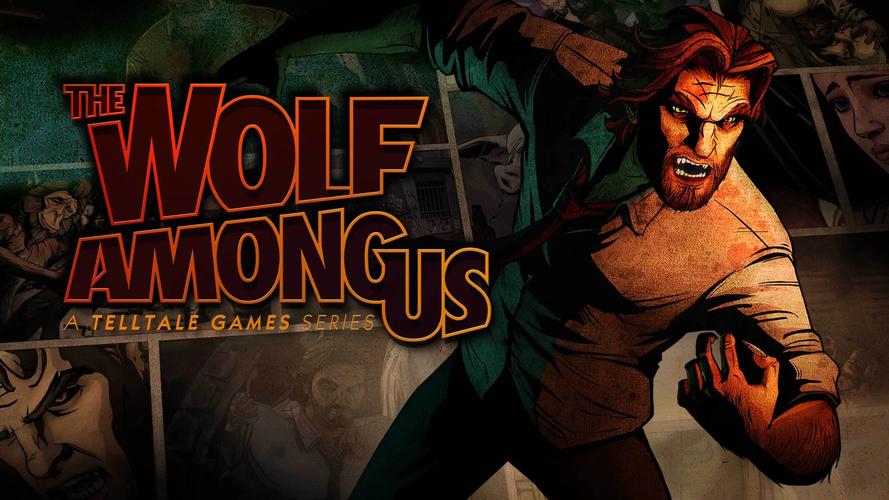
Developed by Telltale Games and released episodically between 2013 and 2014, The Wolf Among Us is an interactive narrative adventure based on the DC Comics series Fables. Set in 1986 New York City, the game takes place in a hidden community called Fabletown, where characters from fairy tales and folklore live in exile, disguised as ordinary humans. You play as Bigby Wolf — the reformed Big Bad Wolf — who serves as Fabletown’s sheriff. When a series of brutal murders targets Fabletown residents, Bigby must navigate a web of corruption, class conflict, and personal history to uncover the truth. The game is a neo-noir detective story through and through, and every choice Bigby makes shapes the investigation, his relationships, and the fate of the community he has sworn to protect.
Chapter One: “Faith” — Setting the Tone
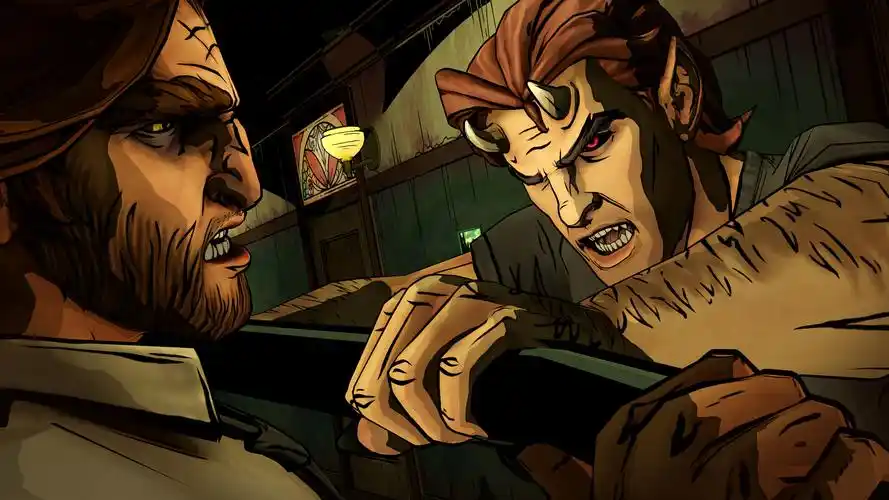
The first episode opens with a confrontation between Bigby and the Woodsman, a drunken brute who is assaulting a young woman outside her apartment. Bigby can either intervene with restraint — talking the Woodsman down, attempting to defuse the situation — or respond with the violence that comes naturally to him. This choice establishes the central tension of the entire game: Bigby is trying to be a better man than the monster he used to be, but the world keeps giving him reasons to revert.
The investigation begins in earnest when the severed head of a Fable named Faith is left on the doorstep of the Woodlands, the apartment building where most of Fabletown’s residents live. Bigby’s investigation leads him to question several key figures: Mr. Toad, a surly landlord; Prince Lawrence, Faith’s estranged husband; and Beauty and Beast, whose marital troubles provide a subplot that runs throughout the season.
The most consequential choice in Chapter One is how Bigby handles the Tweedle brothers, Dee and Dum, who are sent by a mysterious employer to obstruct the investigation. Bigby can either fight them directly or attempt to de-escalate. If he fights, he establishes that he is still willing to use force, but he alienates Snow White, the deputy mayor who wants Bigby to solve problems through legal channels. If he backs down, the Tweedles escape with crucial evidence, but Bigby earns a measure of trust from Snow.
Chapter Two: “Smoke and Mirrors” — The Investigation Deepens
The second episode focuses on Bigby’s interrogation of suspects and the first major revelation of the season. Faith’s death is connected to a larger pattern: someone is killing Fables who cannot afford to pay for expensive glamours, the magical disguises that allow them to pass as human. The victims are the poorest, most vulnerable members of Fabletown, and their deaths have been covered up by someone with the resources and influence to make inconvenient problems disappear.
Bigby’s interrogation of the Woodsman and the Tweedle brothers yields conflicting accounts. The Woodsman claims he was paid to deliver Faith to a mysterious client. The Tweedles insist they know nothing. The key choice in this chapter is how aggressively Bigby pursues the truth. He can physically intimidate suspects, breaking their resistance through fear, or he can rely on patience and logic, earning information through persistence rather than violence.
The chapter ends with the discovery of a second victim — Lily, a prostitute who worked at a seedy brothel called the Pudding and Pie. Her death confirms that Faith’s murder was not an isolated incident, and it leads Bigby to a new suspect: the brothel’s owner, Georgie Porgie.
Chapter Three: “A Crooked Mile” — The Net Tightens
The third episode is the most investigative of the season. Bigby traces the evidence from the Pudding and Pie to a pawn shop, where he discovers a stash of stolen glamours. The owner of the shop, the Crooked Man’s right hand, is a Fable named the Jersey Devil, and his testimony — extracted either through violence or cunning — reveals the outline of a criminal conspiracy.
The Crooked Man, it turns out, has been running a protection racket. Fables who cannot pay are denied glamours. Those who resist are killed. Faith and Lily were not random victims; they were examples, warnings to anyone else who might think of standing up to the Crooked Man’s regime.
Bigby’s relationship with Snow White reaches a turning point in this chapter. Snow wants Bigby to build a case, to gather evidence that will stand up in a court of law. Bigby knows that the Crooked Man’s influence extends into Fabletown’s own government, and that legal channels will never bring him to justice. The player must decide whether to follow Snow’s lead or to take matters into Bigby’s own hands.
Chapter Four: “In Sheep’s Clothing” — The Cost of the Truth
The fourth episode is the most violent and emotionally charged of the season. Bigby confronts the Crooked Man’s enforcers directly, and the confrontation leaves bodies in its wake. The choices made in previous episodes — who Bigby trusted, who he protected, who he sacrificed — all come due.
A pivotal scene occurs at the Trip Trap, a bar run by the troll Gren. The Crooked Man’s enforcers arrive to silence anyone who might testify against their boss. Bigby must fight them off, and the player’s choices determine who survives. If Bigby has been careful to protect the innocent throughout the season, he will have allies in this fight. If he has been reckless or cruel, he will stand alone.
The episode ends with the revelation that the Crooked Man’s conspiracy goes deeper than Bigby imagined. Someone inside Fabletown’s leadership has been protecting him, and the identity of that person will shape the final confrontation.
Chapter Five: “Cry Wolf” — Judgment
The final episode is a trial. Bigby has captured the Crooked Man and brought him before the Fabletown community to answer for his crimes. The trial is presided over by Snow White, and Bigby must present the evidence he has gathered over the course of the season.
The outcome of the trial depends on the choices made across all four previous episodes. If Bigby has gathered enough evidence, and if he has enough witnesses willing to testify, the Crooked Man will be convicted. If the evidence is thin, or if witnesses have been killed or intimidated into silence, the Crooked Man will walk free.
The final choice of the game is what to do with the Crooked Man. Bigby can let the system handle him — imprisonment, exile, whatever the community decides — or he can take justice into his own hands. This choice is not about the Crooked Man’s fate. It is about Bigby’s own nature. If he kills the Crooked Man, he proves that he is still the monster he always feared he was. If he lets him live, he proves that he has become something more.
The Multiple Endings
The Wolf Among Us does not have dramatically divergent endings in the way that some narrative games do. The Crooked Man’s fate, and the identity of the person inside Fabletown who was protecting him, are the two variables that shift. But the tone of the ending — whether it feels like justice has been served, or like the system has failed — is determined by the cumulative weight of the player’s choices.
If Bigby has been a good sheriff — fair, restrained, protective of the innocent — the ending feels like a hard-won victory. The Crooked Man is punished, Fabletown begins to heal, and Bigby earns the trust of the community he once terrorized. If Bigby has been a bad sheriff — violent, corrupt, indifferent to the suffering of the vulnerable — the ending feels hollow. The Crooked Man may be gone, but the system that enabled him remains, and Bigby is part of it.
The final scene of the game shows Bigby walking the streets of Fabletown alone. The neon lights flicker. The shadows are deep. And somewhere, just out of sight, someone whispers a name that promises more trouble to come. The game ends not with a resolution, but with the understanding that Bigby’s work will never be finished — and that he will be there to do it, whether anyone thanks him or not.