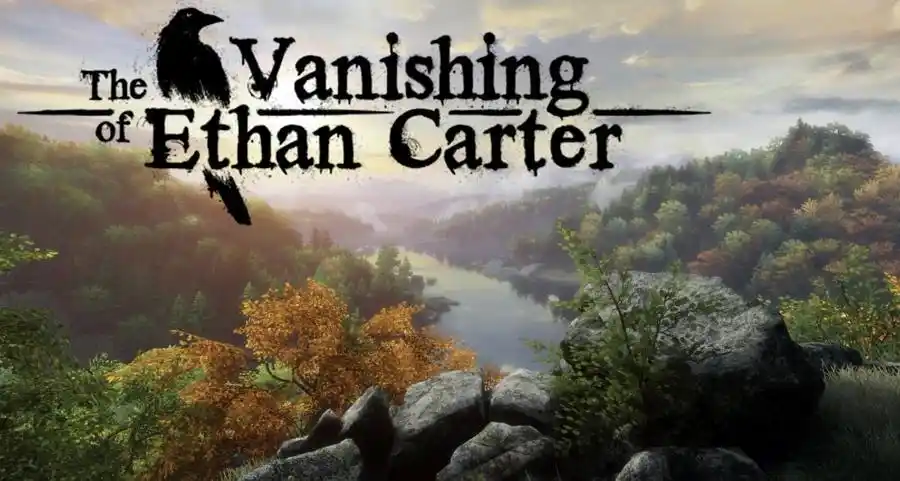
Developed by The Astronauts and released in 2014, The Vanishing of Ethan Carter is a first-person exploration mystery set in the Red Creek Valley of Wisconsin. You play as Paul Prospero, a paranormal investigator who receives a letter from a boy named Ethan Carter, begging for help. When Prospero arrives, the valley is empty, silent, and steeped in an unnatural stillness. There are no NPCs to talk to, no quest markers to follow, no combat encounters. The game places you alone in a sprawling open environment and trusts you to piece together what happened through observation, exploration, and a single supernatural ability: the power to perceive and reconstruct past events.
The Supernatural Perception Mechanic
The central gameplay mechanic of The Vanishing of Ethan Carter is Prospero’s ability to sense residual echoes of past events. Scattered throughout the valley are crime scenes — locations where someone died, or where something pivotal occurred. Each scene is marked by floating words that describe key objects or actions: “blood,” “rope,” “gun,” “struggle.” Your task is to locate the physical objects in the environment that correspond to these words, then touch them to activate a vision of the past.
Once you have found all the relevant objects in a scene, the game presents you with a series of fragmented visions, out of order. You must mentally arrange these fragments into a chronological sequence that makes sense. When the sequence is correct, the scene fully reconstructs itself, showing you exactly what happened in a continuous, unbroken vision. This process is not merely a puzzle mechanic; it is the narrative engine of the entire game. Each reconstruction fills in a piece of the larger story, and by the time you have completed all of them, you will understand what happened to Ethan Carter and his family.
The game does not explicitly tell you the order in which to visit the crime scenes, and the valley is fully open from the start. However, there is a recommended progression that follows the narrative’s internal logic and gradually escalates the complexity of the puzzles.
Recommended Crime Scene Order
Scene One: The Forest Murder
The first crime scene you are likely to encounter is located in the woods near the railway tracks. It involves a fatal confrontation between two men. The key objects to find are a bloody rock, a fallen branch, and a set of footprints leading away from the scene. The reconstruction will reveal a struggle that ended in death, but the identities of the victim and the perpetrator will not be immediately clear. This scene serves as the game’s tutorial, teaching you how the reconstruction mechanic works while also introducing the central mystery: someone has been killing people in this valley, and the reasons are not yet apparent.
Scene Two: The Traps
Follow the railway tracks deeper into the forest, and you will find a series of elaborate traps, each one lethal, each one carefully constructed. This is not a single crime scene but a sequence of smaller discoveries that collectively reveal a pattern. The traps were set by someone who knew the valley intimately and wanted to protect something — or prevent someone from leaving. The key objects here include a bear trap, a swinging log, and a handwritten note that provides the first concrete clue about the motivations behind the violence.
Scene Three: The Church
The church is located on a hill overlooking the valley. Inside, the pews are empty, but the air is heavy with the residue of a recent tragedy. The crime scene involves a gun, a pool of blood near the altar, and a torn page from a Bible. The reconstruction will reveal a confrontation between a father and his son, a moment of unforgivable violence, and the beginning of the family’s unraveling. This scene is emotionally the most difficult in the game, and it establishes the core thematic tension: the conflict between religious faith and familial love.
Scene Four: The Mines
The entrance to the mines is hidden along a rocky trail. Inside, the darkness is absolute, and you must navigate by lantern light. The crime scene is deep within the tunnels, and it involves a cave-in, a body trapped beneath rubble, and a pickaxe stained with blood. The reconstruction here is more complex than the previous scenes, requiring you to piece together a sequence of events that spans several minutes rather than a single moment.
Scene Five: The Carter Family House
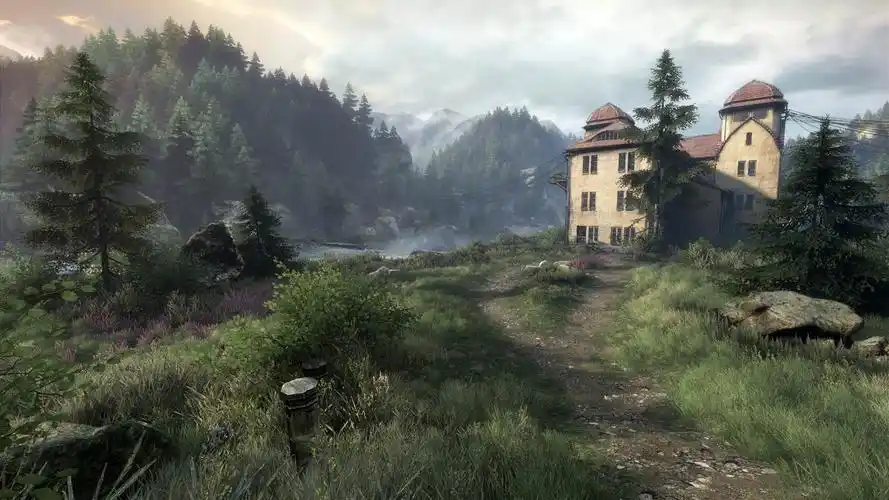
The Carter house stands at the edge of the valley. It is a two-story wooden structure, and inside, every room tells a story. This is the final and most complex crime scene, encompassing the entire house and the surrounding yard. The objects you must find include a wheelchair, a half-written letter, a bottle of whiskey, and a key hidden beneath a loose floorboard. The reconstruction of this scene will bring together all the threads of the narrative, revealing the full scope of the tragedy that consumed the Carter family.
Hidden Stories and Optional Discoveries
Beyond the main crime scenes, the valley is filled with smaller, optional discoveries that deepen the narrative. These include:
The Astronaut’s Dream: Near the dam, you will find a small clearing where a child once played at being an astronaut. The objects here — a cardboard spaceship, a hand-drawn map of the stars — are not tied to any crime scene, but they provide essential context for understanding Ethan’s inner world. Ethan was a boy who dreamed of escape, and the places where he played are as important to the story as the places where people died.
The Witch’s Hut: Hidden in the deepest part of the forest is a small hut filled with occult paraphernalia. This location is connected to a subplot involving a wandering witch who once lived in the valley. Finding the hut and examining its contents adds a layer of supernatural ambiguity to the story — was the tragedy that befell the Carters purely human in origin, or was something else at work?
The Missing Boy: Scattered notes and drawings throughout the valley hint at the existence of another boy, one who lived in the valley before the Carters arrived. His story is never fully explained, but the fragments you can find suggest a parallel tragedy, one that may have set the stage for everything that followed.
The Ending and Its Interpretation
The final reconstruction, in the Carter family house, reveals the full truth. The murders, the traps, the supernatural occurrences — all of them were the creations of Ethan Carter’s imagination, manifested into reality by his immense, untrained psychic powers. The family did not die at the hands of a killer; they died because Ethan, a child who could not control his abilities, dreamed of their deaths, and his dreams became real. The witch, the astronaut, the wandering spirits — all of them were stories Ethan told himself to make sense of a world that was too painful to face.
The ending of the game reveals that Prospero is not a conventional investigator. He is himself a psychic, drawn to the valley by the sheer force of Ethan’s emanations. His investigation is not an attempt to solve a crime, but an act of witness. By reconstructing the deaths of the Carters, he gives their suffering a form, a narrative, a meaning. The final scene shows Prospero leaving the valley, carrying with him the weight of what he has seen. The player is left to decide whether this act of witness was enough.
The Vanishing of Ethan Carter does not offer easy answers. It does not explain why some people are born with gifts that destroy them. It does not offer comfort to those who are left behind. What it offers, instead, is a mystery that rewards patience and attention, and a story that lingers long after the final frame has faded to black.