
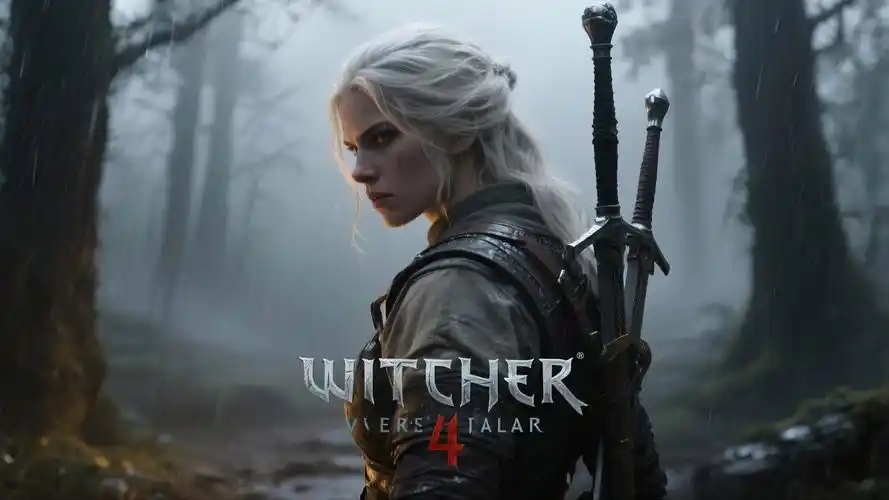
CD Projekt Red confirmed on July 14, 2026, that The Witcher 4, codenamed “Polaris,” has officially entered the full production phase. The milestone was announced via the company’s quarterly investor update, where Joint CEO Michał Nowakowski stated that the project has reached a stage where “all core systems are in place, the narrative framework is locked, and the team is now focused on building the complete game experience from opening to credits.” This marks the most significant progress update on The Witcher 4 since the game was formally announced in early 2022.
The scale of the production is unprecedented in CD Projekt Red’s history. According to the investor update, over 600 developers are currently working on The Witcher 4, making it the largest single development team ever assembled at the studio. This represents more than half of CD Projekt Red’s total workforce, which now exceeds 1,000 employees across its Warsaw, Kraków, and Boston offices. For comparison, The Witcher 3: Wild Hunt was developed by a team of roughly 250 people at its peak, and Cyberpunk 2077 by approximately 500. The size of the Polaris team reflects the project’s ambition: CD Projekt Red has previously described The Witcher 4 as the start of a new saga rather than a direct continuation of Geralt’s story, and the scale of the team suggests an open-world RPG of even greater scope than its predecessor.
The narrative details shared in the investor update were limited but significant. Nowakowski confirmed that the game will feature a new protagonist and will not center on Geralt of Rivia, though he added that Geralt “will appear in a role that fans of the series will find meaningful.” The story is set “several decades” after the events of The Witcher 3, in a period described as “a time of rebuilding and new threats emerging from the shadows of the Northern Wars.” The School of the Lynx, a new witcher school that was teased in a piece of promotional artwork released by the studio in 2022, was confirmed to be central to the story, though Nowakowski declined to elaborate on whether the player character is a member of that school or encounters it during their journey.
The technical foundation for The Witcher 4 has also been a topic of significant interest. CD Projekt Red confirmed in 2022 that the game is being built on Unreal Engine 5, marking a definitive end to the studio’s proprietary REDengine. In the July 2026 update, the company noted that its collaboration with Epic Games has deepened, and that CD Projekt Red engineers have contributed custom modifications to Unreal Engine 5 specifically designed to support the kind of densely populated, seamlessly streaming open worlds that the Witcher series demands. These modifications are being shared with Epic and may eventually benefit other developers building similar games on the engine.
The shift to Unreal Engine 5 has also informed CD Projekt Red’s approach to development. In a section of the investor update discussing the lessons learned from the troubled launch of Cyberpunk 2077, Nowakowski emphasized that the studio has restructured its production pipeline to prioritize iterative testing on target hardware. “Every build of The Witcher 4 that is playable is tested on console and PC hardware simultaneously,” he wrote. “We are not repeating the mistake of developing primarily on high-end PCs and assuming that the console versions will catch up later.” The company confirmed that The Witcher 4 is targeting a simultaneous release on PC, PlayStation 5, and Xbox Series X|S.
No release window was provided in the update. Analysts who follow CD Projekt Red have noted that full production typically lasts between two to three years for a project of this scale, which would place the game’s launch somewhere between mid-2028 and late 2029. CD Projekt Red’s stock price saw a modest increase of approximately 4% following the announcement, reflecting cautious optimism from investors who remain mindful of the studio’s history but encouraged by the steady, transparent cadence of updates since the Cyberpunk 2077 launch crisis.
For fans who have waited over a decade since the release of The Witcher 3, the confirmation that The Witcher 4 has entered full production is the clearest signal yet that a new chapter in the saga is genuinely on the horizon. The school is no longer a rumor. The team is in place. The story is locked. Now the real work begins.