

Developed by The Fullbright Company and released in 2013, Gone Home is a first-person exploration narrative set in 1995. You play as Kaitlin Greenbriar, a twenty-one-year-old woman who has just returned from a year-long trip to Europe to find her family home empty on a stormy night. A note on the front door from your younger sister Sam tells you not to go looking for answers about where everyone is. The game consists entirely of exploring this house, examining objects, and piecing together what happened. There are no enemies, no puzzles in the traditional sense, and no fail states. Every drawer can be opened, every note can be read, and every object tells a story.
Exploration Route and Key Item Locations
The Greenbriar house is a large, three-story home that Kaitlin’s father inherited from his uncle Oscar. The ground floor contains the foyer, living room, kitchen, and a guest bedroom. The second floor houses the parents’ bedroom, a bathroom, and a sewing room. The third floor is the attic, which Sam has converted into her bedroom. A basement is accessible via a door in the hallway near the kitchen.
The game allows you to explore in any order, but there is a recommended route that follows the narrative’s internal logic and ensures you unlock the full story in a coherent sequence.
Ground Floor Exploration:
Begin in the foyer. Read the note from Sam on the door. Move through to the living room and examine the answering machine. There are messages from Kaitlin’s mother, Janice, and from a woman named Carol. The messages indicate that Janice and Kaitlin’s father, Terry, are away on a couples’ retreat. This explains where the parents are, but not why the house feels abandoned.
The kitchen contains a bulletin board with a note about Sam’s school performance. A drawer near the sink holds a key to the basement. Do not go to the basement yet — the game’s most significant discovery is on the third floor, and you should build toward it.
Second Floor Exploration:
The parents’ bedroom is located at the end of the upstairs hallway. On the desk, you will find documents related to Terry’s career — he is a writer who has struggled to produce a successful follow-up to a novel he published years ago. These documents are not essential to the main story but provide context for the family’s tensions.
The sewing room next to the parents’ bedroom contains evidence that Janice has been reconsidering her life and career. Letters from a conservation organization and brochures for wildlife retreats suggest that she is preparing for a change. These details are thematically relevant to the story’s conclusion.
A locked door at the end of the hallway leads to the attic stairs. The key is hidden in a book in the living room, but the game allows you to access the attic through a secret passage in the closet of the parents’ bedroom. Open the closet, move the clothes aside, and you will find a hidden door.
Third Floor Exploration (Sam’s Room):
Sam’s bedroom in the attic is the heart of the game. This room tells the complete story of what happened while Kaitlin was away. On Sam’s desk, you will find her journal. Reading it begins a series of audio diary entries narrated by Sam herself, which play as you explore the house. These entries are the primary narrative vehicle of the game.
Key items in Sam’s room include a shoe box under her bed containing concert tickets and a mix tape, a photograph tucked into the frame of her mirror, and a series of notes hidden in the pages of a book on her nightstand. These items collectively reveal that Sam formed a close friendship with a girl named Lonnie, a rebellious classmate who introduced her to punk music and a world outside the confines of their conservative upbringing.
Sam’s Full Story and Diary Unlock Sequence
Sam’s journal entries unlock in a specific order as you find key objects throughout the house. The full story, reconstructed, is as follows:
Sam and Lonnie met at school. Sam was lonely and struggling with her parents’ expectations. Lonnie was confident, rebellious, and unapologetically herself. They became fast friends, spending afternoons together at Lonnie’s apartment, listening to records, and sharing secrets. Their friendship deepened into something more — the game handles this with a delicate touch, making it clear through Sam’s journal entries that she was falling in love without ever using the word.
The relationship reached a crisis point when Lonnie’s parents discovered them together. Lonnie’s father, a military man, reacted with anger. Sam’s parents, while less overtly hostile, made it clear through their silence and discomfort that they did not approve. The strain of hiding their relationship, combined with the pressures of school and family, began to take a toll.
The story’s climax occurs on the night Kaitlin arrives home. Sam and Lonnie had made plans to leave together — to drive away and start a new life somewhere they could be themselves. Sam’s journal entries from this period are frantic, excited, and terrified all at once. The final entry, left on Sam’s desk, explains that she has gone through with the plan. She is with Lonnie. She is safe. She asks Kaitlin to understand.
Hidden Narrative Details
Several areas of the house contain narrative threads that enrich the story without being essential to understanding it.
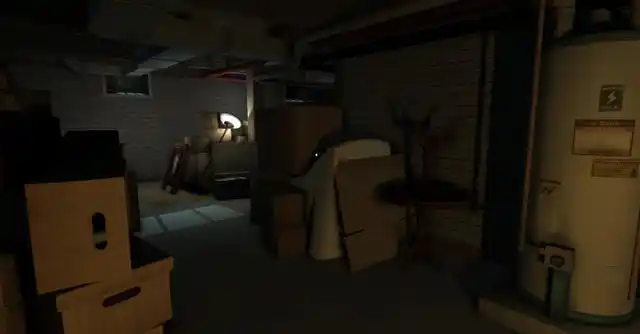
The Basement: The basement contains evidence of Terry’s struggles as a writer. Boxes of unsold copies of his novel sit alongside rejection letters from publishers. A folder of manuscript pages reveals that he has been working on a new book, one about time travel and alternate histories, but the work is incomplete and shows signs of obsessive revision. The basement also contains objects inherited from Oscar, the house’s original owner. Oscar was apparently involved in some kind of scandal — a safe in the basement contains documents suggesting he was a convicted sex offender, and the family inherited the house under complicated legal circumstances. This subplot is never fully resolved, but it adds a layer of darkness to the house’s history.
The Secret Passages: The house contains multiple hidden passageways, including a shortcut from the pantry to the living room. These passages are not merely exploratory curiosities; they are thematically tied to the story’s interest in what is hidden versus what is shown. Sam’s relationship with Lonnie had to exist in the equivalent of these hidden spaces — away from the open rooms where the family performed its normal life.
The Weather: Outside the windows, a thunderstorm rages throughout the game. The storm is not merely atmospheric; it is a narrative device. The flashes of lightning briefly illuminate rooms before you can turn on the lights, offering glimpses of the house in its natural, abandoned state. The storm intensifies as you approach the attic, and by the time you reach Sam’s room, the thunder is continuous. The storm reflects both Kaitlin’s emotional state and the turbulence of the story she is uncovering.
Ending Interpretation
The game ends with Sam’s final journal entry. She is gone. She is with Lonnie. The house is empty. Kaitlin has arrived too late to say goodbye, but she has arrived in time to understand.
Gone Home is a story about the gap between the life a family presents to the world and the lives its members actually live. Every character in the house — Terry, Janice, Sam, even the absent Kaitlin — is hiding something. The house itself is a facade, a structure of rooms designed to present an image of stability while containing multiple hidden passages, locked doors, and secrets. Sam’s story is the most urgent and the most fully realized, but it is not the only story in the house. The game’s genius is that it trusts the player to find all of these threads and weave them together independently, without a single prompt or objective marker to guide the way.