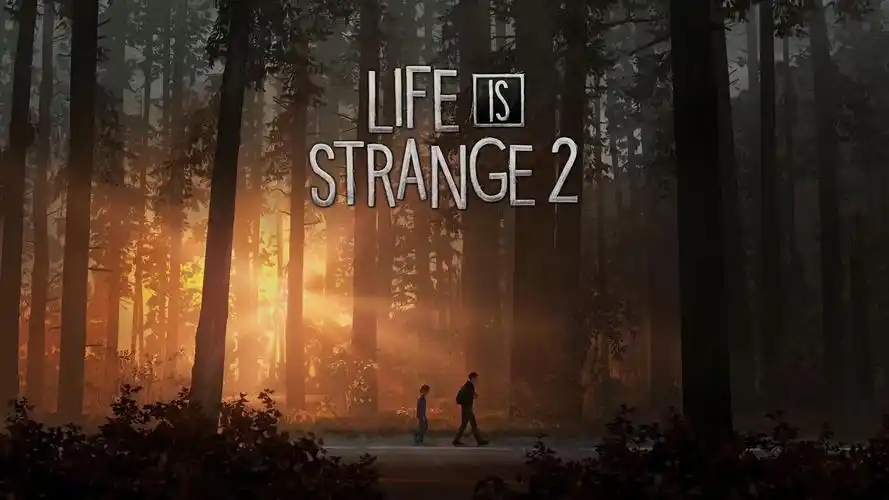
Developed by DONTNOD Entertainment and published by Square Enix, Life Is Strange 2 was released episodically between 2018 and 2019. The game follows Sean and Daniel Diaz, two Mexican-American brothers from Seattle whose lives are shattered when their father is shot and killed by a police officer in a tragic confrontation outside their home. In the chaos, Daniel’s latent telekinetic powers manifest with devastating force, and the brothers are forced to flee, embarking on a journey south toward their father’s hometown of Puerto Lobos, Mexico. Unlike the original Life Is Strange, which focused on a small town and a supernatural mystery, the sequel is a road story, spanning months and hundreds of miles, with every episode taking place in a different location and introducing a new cast of supporting characters.
Daniel’s Morality and Brotherhood System
The defining mechanic of Life Is Strange 2 is not Sean’s decisions, but Daniel’s development. Sean is the player character, but Daniel is the emotional and narrative center of the game. Everything Sean does — every word he speaks, every action he takes, every moral compromise he makes or refuses — is witnessed and absorbed by his younger brother. The game tracks Daniel’s internal state through two hidden metrics: his Morality and his Brotherhood with Sean.
Morality determines whether Daniel grows up to believe in compassion, restraint, and the value of human life, or whether he becomes cynical, ruthless, and willing to use his powers without regard for consequences. High Morality Daniel will avoid violence, express guilt when he hurts someone, and ultimately make choices that prioritise the safety of others. Low Morality Daniel will become increasingly aggressive, use his powers to intimidate or harm, and question Sean’s authority.
Brotherhood determines the strength of the bond between the two brothers. High Brotherhood means Daniel trusts Sean, follows his lead, and looks to him for guidance in moments of crisis. Low Brotherhood means Daniel becomes defiant, dismissive of Sean’s advice, and more likely to act on his own impulses.
These two metrics interact in complex ways. A Daniel with high Morality but low Brotherhood will be a good person who no longer listens to his brother. A Daniel with low Morality but high Brotherhood will be a dangerous person who is fiercely loyal to Sean. A Daniel who scores low on both has effectively been lost to Sean, emotionally and morally.
The system is influenced by nearly every interaction in the game. Small moments — whether Sean shares his food with Daniel, whether he tells Daniel the truth about difficult situations, whether he encourages or scolds him after his powers manifest — accumulate over the course of the journey. There is no single decision that defines Daniel’s character. Instead, it is the sum of dozens of small choices, each one a lesson he learns from watching his brother.
Key Branching Points Across Episodes
Episode 1, “Roads,” establishes the brothers’ situation and introduces the central moral tension. At a gas station, the owner, Hank Stamper, recognises the brothers from a news report and attempts to detain them. Daniel’s powers activate, and Sean must decide how to handle the confrontation. If Sean encourages Daniel to use his powers aggressively, Hank is seriously injured, and Daniel’s first experience with his abilities is one of violence. If Sean tells Daniel to stop, the situation is resolved with less harm, but the brothers’ escape is more difficult. This moment sets the tone for Daniel’s understanding of his powers — as a weapon or as a last resort.
Episode 2, “Rules,” focuses on the brothers’ stay with their grandparents, Stephen and Claire Reynolds, in Beaver Creek. This episode introduces Chris, a young neighbour boy who becomes Daniel’s first real friend since the journey began. Sean can either encourage Daniel to be honest with Chris about his powers, or to keep them hidden. If Daniel reveals his powers, Chris will be drawn into the brothers’ situation with consequences that echo into later episodes. If Daniel keeps the secret, he learns restraint but at the cost of isolation. This episode also contains a critical moment at a Christmas market, where Daniel’s behaviour — whether he steals a gift, whether he uses his powers in public — is directly shaped by the example Sean has set.
Episode 3, “Wastelands,” is the turning point for Daniel’s morality. The brothers have joined a community of drifters and cannabis trimmers living in the California redwoods, led by a charismatic man named Finn and a more cautious woman named Cassidy. Sean can pursue a romantic relationship with either Finn or Cassidy, or remain platonic with both. More importantly, Sean is presented with a plan to break into the safe of a dangerous drug dealer, Merrill, to steal money for the journey to Mexico. Whether Sean agrees to the heist, and whether he involves Daniel in it, has profound consequences. If Daniel participates in the heist and violence ensues, his morality plummets. If Sean shields Daniel from the plan, their brotherhood may suffer, but Daniel’s innocence is preserved.
Episode 4, “Faith,” is the darkest chapter of the game. After a traumatic event at the end of Episode 3, Sean is separated from Daniel and must find his way back. This episode introduces a cult leader named Lisbeth Fischer who has taken Daniel in, exploiting his vulnerability and his powers for her own purposes. The episode tests Sean’s persistence and the depth of his bond with Daniel. The choices made in previous episodes — whether Daniel trusts Sean, whether he has internalised lessons of compassion or violence — determine how this reunion plays out.
Episode 5, “Wolves,” is the finale. The brothers finally reach the border wall separating the United States from Mexico. What happens here is the culmination of every choice made across the entire season. Daniel’s Morality and Brotherhood scores, accumulated over dozens of hours, determine which of the game’s endings is available.

The Four Main Endings
Life Is Strange 2 has four distinct endings, and which one the player receives is determined entirely by Daniel’s final Morality and Brotherhood values.
Parting Ways (High Morality, High Brotherhood): Sean and Daniel reach the border. Daniel refuses to use his powers to hurt the officers blocking their path, but he uses them to force open the gate, allowing Sean to cross alone. Daniel stays behind, surrendering to the police, while Sean escapes to Mexico. Years later, Sean lives in Puerto Lobos, and the brothers remain in contact through letters and photographs. Daniel has built a life in the United States with his grandparents, and the bond between the brothers endures despite the distance. This ending is widely considered the most hopeful, balancing Sean’s freedom with Daniel’s moral integrity.
Redemption (High Morality, Low Brotherhood): Sean surrenders to the police at the border. Daniel, following the moral example Sean has set, does not intervene with his powers. Sean serves a lengthy prison sentence. Years later, he is released and reunites with Daniel, who is now a young adult. The bond between them has been strained by time and separation, but Daniel has grown into a good man with a stable life. This ending is bittersweet — Sean sacrifices his freedom for Daniel’s future, and Daniel honours that sacrifice by living well.
Blood Brothers (Low Morality, High Brotherhood): The brothers cross the border together, using Daniel’s powers to kill the officers who try to stop them. They reach Puerto Lobos, but their life there is violent and precarious. They use Daniel’s powers to run a criminal operation, and the bond between them, while still strong, is forged in blood rather than love. This ending is the darkest in tone, presenting a version of the brothers who have survived by abandoning the values they once held.
Lone Wolf (Low Morality, Low Brotherhood): Sean dies at the border, killed by the officers. Daniel, alone and consumed by grief and rage, uses his powers to destroy everything around him before fleeing to Mexico. He reaches Puerto Lobos alone, carrying Sean’s lighter. Years later, he is a solitary, haunted figure, having lost both his brother and his moral compass. This ending is the most tragic, the result of a journey in which Sean failed to teach Daniel anything but violence.
Hidden Dialogue and Missable Interactions
Several important narrative beats are entirely missable. In Episode 1, if Sean lingers in his family home before the police arrive, he can have a final conversation with his father that provides crucial emotional context for the entire journey. In Episode 2, a series of optional conversations with Stephen and Claire reveals details about their relationship with Sean and Daniel’s mother, Karen, who abandoned the family years earlier. In Episode 3, the romance paths with Finn and Cassidy each unlock unique dialogue and cutscenes that are mutually exclusive — a single playthrough cannot see both.
Most significantly, the game features a hidden scene in Episode 5 that can only be triggered if Sean maintained a close bond with a specific character across multiple episodes. If Sean called Lyla, his best friend from Seattle, at every available opportunity — in Episode 1 before leaving town, in Episode 2 from a payphone, and in a dream sequence in Episode 4 — Lyla will appear in the ending, having kept in contact with Daniel throughout Sean’s absence. This scene is a small but emotionally powerful reward for players who remembered that the people left behind are still part of the story.
Life Is Strange 2 is fundamentally a game about consequences — not the immediate, dramatic consequences of a single choice, but the slow, cumulative consequences of the example you set for someone who is watching you, learning from you, and becoming who you teach him to be. Daniel is the player’s true legacy in this game, and the ending you receive is not a judgment of a single moment, but of the entire journey that led there.