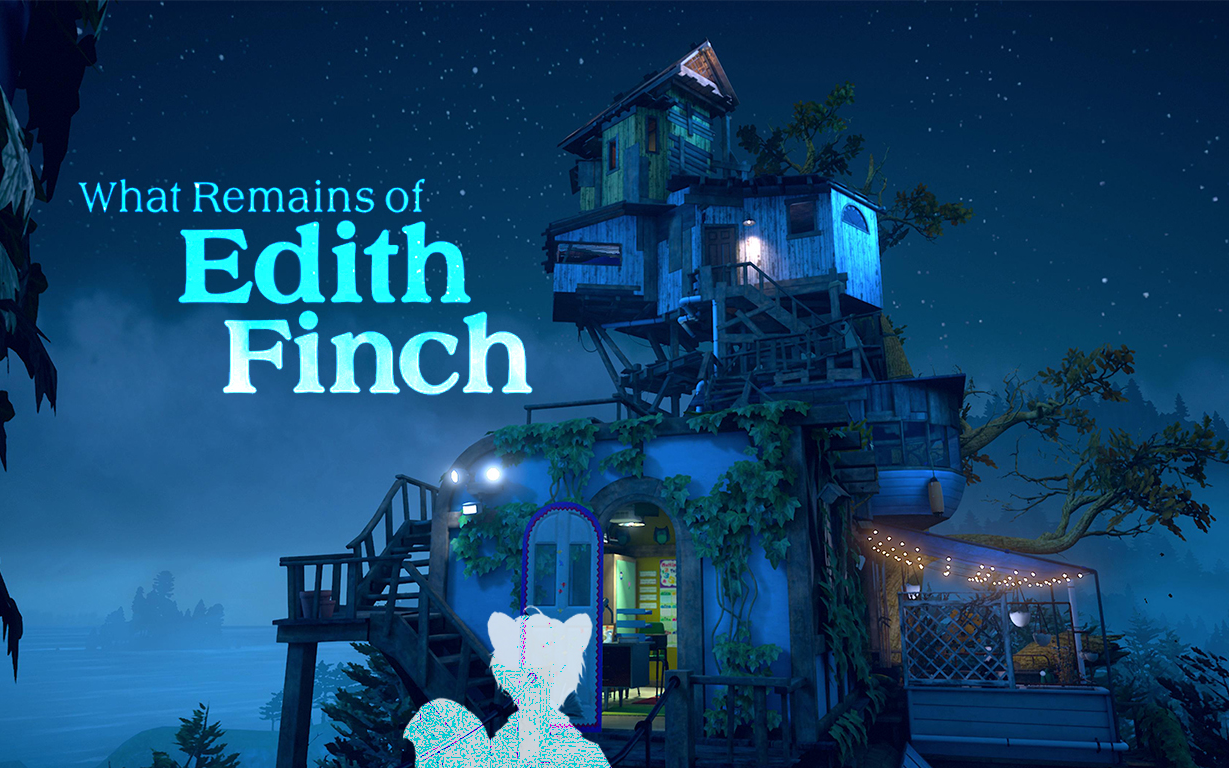
Developed by Giant Sparrow and published by Annapurna Interactive, What Remains of Edith Finch is a first-person narrative exploration game released in 2017. It won the award for Best Narrative at The Game Awards and holds a score of 88 on Metacritic. The game is often cited as a benchmark title within the walking simulator genre. Players take on the role of Edith Finch, the last surviving member of the Finch family, as she returns to her ancestral home on Orcas Island for the first time in seven years. The house, a labyrinthine and impossible structure built room upon room over generations, holds the stories of each deceased family member, sealed behind locked doors that Edith must unlock one by one. The game is a collection of vignettes, each playable, each told from the perspective of a different relative, and each ending in that relative’s death. There is no combat, no fail state, and no traditional puzzle-solving. The only objective is to uncover the stories and, in doing so, piece together the tragic history of a family that believed itself to be cursed.
Narrative Structure and Unlocking All Stories
The Finch house is divided into multiple sealed rooms, each belonging to a different family member. Edith begins in her own old bedroom and proceeds through the house in a loosely linear order, but several stories are optional and can be missed if the player does not explore thoroughly.
The story of Molly Finch, the first playable vignette, is unlocked by entering Molly’s room on the ground floor. Molly was a ten-year-old girl who was sent to bed without dinner. The vignette transforms her hunger into a surreal dream sequence in which she transforms into a cat, an owl, a shark, and finally a tentacled sea monster. The sequence ends with Molly’s death, which is left ambiguous — whether she died of starvation, poisoning from eating holly berries, or something else entirely is never explicitly confirmed.
Barbara Finch was a child actress whose fame peaked with a horror film role. Her room is accessed from a hallway on the second floor, and her story is told through a comic book that Edith finds. The comic depicts Barbara’s final night, in which she is attacked in her home by a group of monsters — or, depending on interpretation, by her own boyfriend and his friends in a prank gone wrong. The story is deliberately framed in the style of a horror comic, and the truth of what happened is left for the player to interpret.
Calvin Finch was a young boy obsessed with space exploration. His room is a treehouse in the woods behind the main house, which can be reached by following a path from the cemetery. Calvin’s vignette takes the form of a swing set. As he swings higher and higher, the world around him transforms into a fantastical space voyage, and he eventually swings so high that he is flung from the swing and into the ocean below. His story is one of the most visually striking in the game, transforming a simple childhood activity into a metaphor for escape and the dangers of unbridled imagination.
Lewis Finch is the last story Edith encounters before the game’s conclusion. Lewis worked at a cannery, and his vignette is played from a first-person perspective while his right hand performs the monotonous task of chopping fish heads, while his left hand guides an elaborate imaginary fantasy kingdom that gradually consumes his entire consciousness. The player must simultaneously manage both the real-world task and the fantasy world, a mechanical representation of Lewis’s dissociative state. His story ends with his suicide, and the vignette’s power lies in its ability to make the player feel the seductive pull of the fantasy over the crushing boredom of reality.
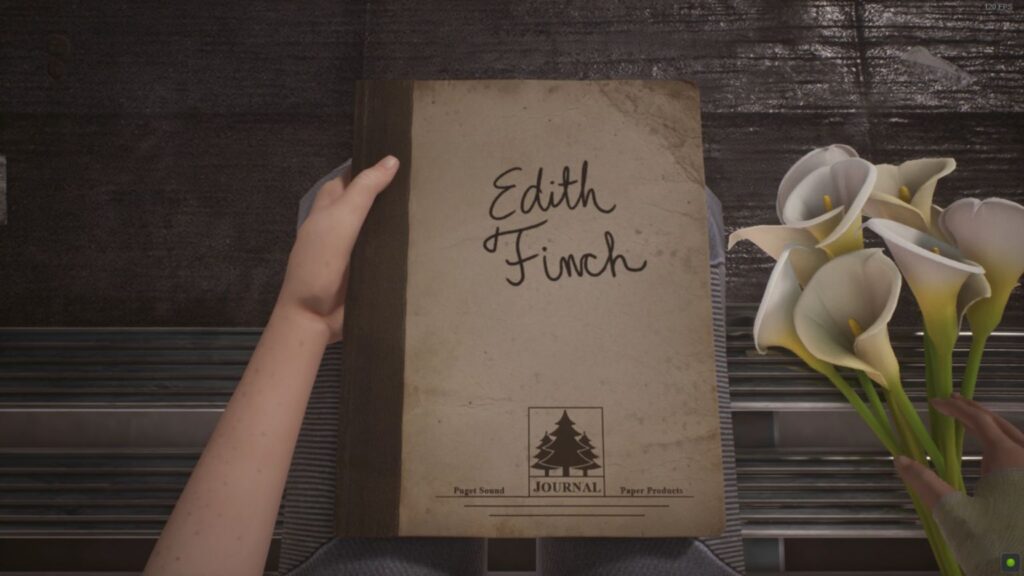
The final story belongs to Edith herself, which unfolds in real time as she explores the house and documents her findings in her journal. Her fate is revealed only at the very end of the game, in a short sequence played from the perspective of her son, Christopher, who reads the journal years later.
To unlock all stories, players must thoroughly explore every accessible room before proceeding to the next section of the house. The stories of Milton Finch, who disappeared without a trace, and the family patriarch Odin Finch, who died before the house was built, are told through scattered documents, secret passages, and a hidden underground bunker. The side path to the old house foundation, accessible via a trail behind the cemetery, contains additional context about Odin’s fate. A hidden peephole in a bookshelf on the ground floor reveals a secret bedroom that many players miss entirely.
Hidden Achievements and Their Narrative Significance
Several achievements in the game require specific actions that carry narrative weight. The achievement “Great Owl” is unlocked by finding and looking through every peephole and telescope in the game. These devices appear throughout the house, allowing Edith to peer into rooms and scenes she cannot physically enter. Collecting them all rewards the player with additional fragments of the family’s history that are not part of the main story path.
The achievement “All Roads” requires the player to walk down every single path and trail surrounding the Finch property before entering the house. This includes the cemetery, the beach, the old house foundation, and the forest trails. Doing so triggers unique monologue lines from Edith in which she reflects on the isolation of her childhood and the weight of being the last Finch. This achievement is thematically tied to the game’s central question — whether the Finch family was truly cursed, or whether their belief in the curse became a self-fulfilling prophecy.
Another hidden narrative interaction occurs with the flipbook in Milton’s room. Repeatedly activating the flipbook in a specific sequence will trigger a brief but poignant audio clip from Edith’s mother, recorded years earlier, in which she expresses her fear that the family’s obsession with storytelling is itself a form of self-destruction. This audio clip is easy to miss and provides the most direct articulation of the game’s central thematic tension.
Thematic Interpretation: The Curse as Narrative
What Remains of Edith Finch is fundamentally a game about the stories families tell themselves, and the power — and danger — of narrative. Each Finch died under circumstances that were either genuinely tragic, bizarrely coincidental, or self-inflicted through reckless behavior. The family’s unifying belief was that they were cursed, and this belief shaped how each generation lived and died.
The game never confirms whether the curse is real. Instead, it presents each story as a subjective, heavily stylized account of a death, leaving the player to question whether the fantastical elements are literal, metaphorical, or simply the embellishments of grief-stricken survivors trying to make sense of senseless loss. The final moments of the game, in which Edith’s son reads her journal, reframe everything the player has experienced as a story being passed down, a legacy of memory that can either trap the next generation or set them free.