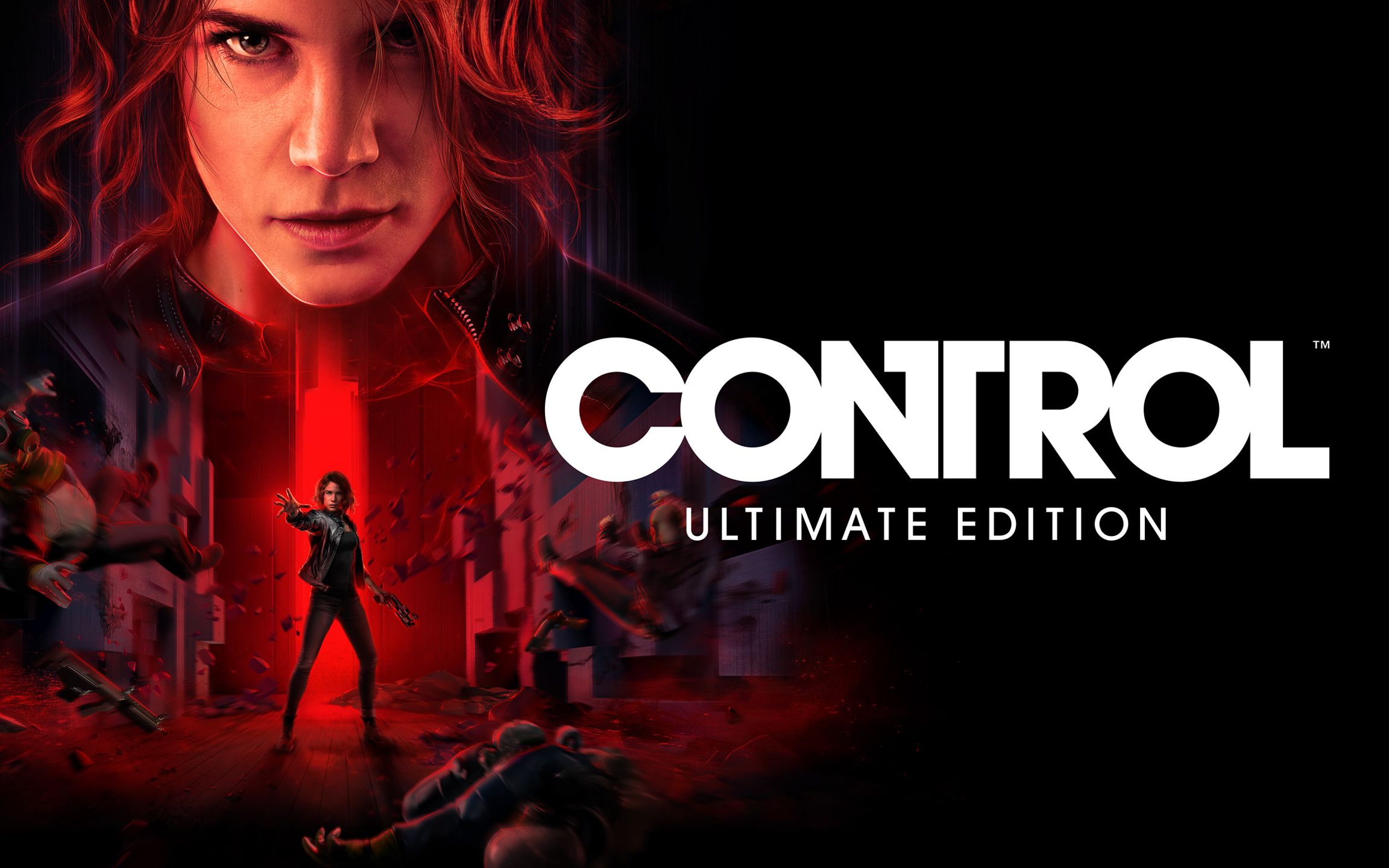
Developed by Remedy Entertainment and released in 2019, Control is a supernatural third-person action-adventure game set within the Federal Bureau of Control, a secret government agency tasked with studying and containing paranormal phenomena. You play as Jesse Faden, who arrives at the Bureau’s headquarters — the Oldest House — seeking answers about her missing brother, only to find herself thrust into the role of Director after the previous Director’s death. The game weaves together gunplay, telekinetic powers, and a deeply atmospheric narrative inspired by the SCP Foundation and the works of David Lynch. With Control 2 set to release in July 2026, now is the perfect time to revisit or discover this critically acclaimed title.
The Service Weapon and Telekinetic Powers
Combat in Control is built around two pillars: the Service Weapon, a shapeshifting firearm that is bound to Jesse as the new Director, and her telekinetic abilities, which are unlocked and upgraded throughout the game.
The Service Weapon takes on multiple forms, each functioning as a different weapon type. The default form, Grip, is a semi-automatic pistol with balanced damage and accuracy, making it the most reliable all-purpose tool in Jesse’s arsenal. Shatter is a close-range shotgun-style blast that deals massive damage but requires you to be within a few metres of the target. Spin is a rapid-fire submachine gun with lower accuracy, best used to suppress fast-moving enemies. Pierce is a charged precision shot capable of punching through multiple enemies and some forms of cover, though its long charge time leaves you vulnerable. Charge launches explosive projectiles that deal area-of-effect damage. The Service Weapon draws from a single shared ammunition pool that recharges automatically when not firing, so you never need to scavenge for ammo — but you must learn to manage your firing rhythm to avoid running dry in the middle of a fight.
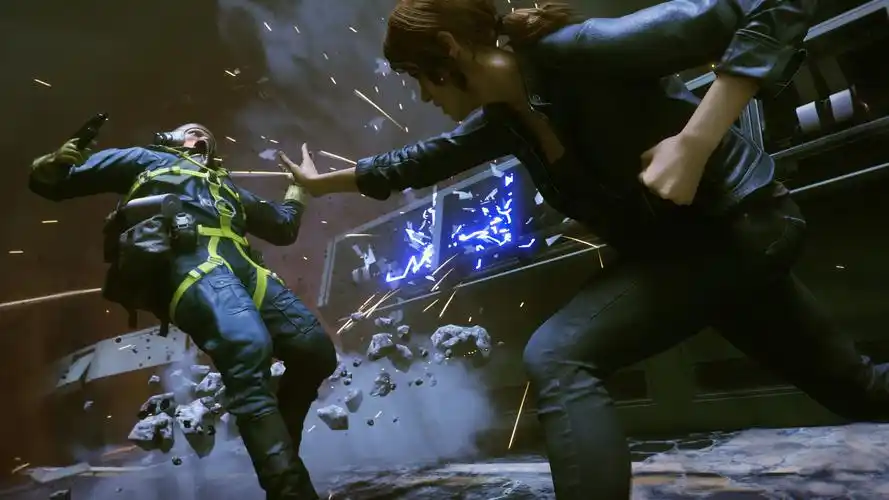
Jesse’s telekinetic abilities, collectively referred to as Launch, are the true stars of the combat system. Launch allows you to grab objects from the environment — chunks of concrete, office furniture, fire extinguishers, and even enemy projectiles — and hurl them at foes. Launch is not merely a supplementary tool; it is your primary source of damage output for most encounters. The reason is simple: Launch deals heavy damage, requires no ammunition, and can be used while the Service Weapon is recharging. The game expects you to weave between Launch and gunfire constantly.
Other key abilities include Evade, a short dodge that provides invincibility frames and is essential for surviving boss encounters. Shield allows you to pull debris from the environment to form a protective barrier in front of Jesse, blocking incoming fire. Seize is a late-game ability that lets you temporarily turn low-health enemies into allies, which is particularly useful in chaotic encounters with multiple foes.
Ability Upgrades and Resource Investment
Upgrades in Control are handled through a system called Ability Points, earned by completing missions and finding hidden locations. Points are invested into a skill tree divided into branches for each ability and weapon form. New players should prioritise the following upgrade path: first, invest in Launch energy efficiency and Launch damage. Since Launch is your primary offensive tool, reducing its energy cost and increasing its output will have the most immediate impact on your combat effectiveness. Next, upgrade Health to increase Jesse’s survivability. Then, invest in Energy recovery speed, which allows you to use Launch more frequently. Weapon forms can be upgraded afterwards, with Grip and Shatter taking priority for their general-purpose utility.
Materials such as Source, Astral Blasts, and various House Memories are found throughout the Oldest House and are used at Control Points to construct weapon forms and personal mods. Source is the primary currency, earned by defeating enemies and completing Bureau Alerts — timed side objectives that appear randomly. Do not hoard Source; spend it regularly at Control Points to keep your weapon forms upgraded to your current level. The cost of upgrades increases as you progress, but the gains in combat efficiency far outweigh the expense.
Navigating the Oldest House
The Oldest House is a vast, interconnected brutalist structure that serves as both the game’s setting and its most confounding obstacle. The building is laid out in sectors — Executive, Research, Containment, Maintenance, and others — connected by a central hub. Navigation can be disorienting because the map is deliberately presented as a flat, stylised diagram rather than a precise top-down layout. New players often become frustrated by the map’s apparent lack of clarity.
The solution is to rely far less on the map screen and far more on the in-game signage. Every corridor, sector, and room in the Oldest House has a sign posted on the walls, typically near doorways and intersections. These signs are not decorative; they are your primary navigation tool. When you need to reach a specific location, note the sector name and follow the signs on the walls, just as you would in a real office building. The map screen is best used only for checking your general location within a sector, not for plotting a precise route.
Control Points serve as fast-travel nodes, save points, and upgrade stations. Whenever you enter a new area, prioritise locating and cleansing the nearest Control Point. This not only gives you a foothold for fast travel but also heals Jesse and refills her ammunition. Fast travel between Control Points is unlocked after you reach the central Maintenance sector.
Boss Strategies for Key Encounters
Tommasi is the first major boss and serves as a skill check for your mastery of Launch. Tommasi hovers above the ground and throws debris at you — the very same debris you can catch with Launch and hurl back. The core loop of this fight is simple: wait for Tommasi to grab an object, use Launch to snatch it out of the air before it reaches you, and throw it back at him. When Tommasi is staggered, unload with Grip or Shatter. Avoid staying in one spot; he will periodically dive at you, and the Evade ability is essential for dodging these charges.
Salvador is a stationary boss who attacks with a devastating burst of gunfire if you remain in his line of sight. The arena is ringed with pillars that provide cover. The strategy is to move between pillars, wait for Salvador to reload, then step out and hit him with Launch. Do not attempt to trade gunfire with him in the open — his damage output is too high. Use Shatter when he teleports close to your position, then Evade behind cover before he recovers.
esse is the final encounter of the main story and tests every skill the player has developed. The fight consists of multiple phases, each with different attack patterns. In the first phase, esse fires projectiles and performs ground slams. Use Launch to damage her at range and Evade to avoid her area-of-effect attacks. In subsequent phases, she summons duplicate versions of herself and gains the ability to levitate, making her harder to hit. During these phases, focus on eliminating the duplicates first — they have low health but can quickly overwhelm you if ignored. Seize, if unlocked, can turn one duplicate against the others, giving you valuable breathing room. Throughout the entire fight, maintain constant movement. Staying still for more than a few seconds will give esse an opening to land a devastating hit.