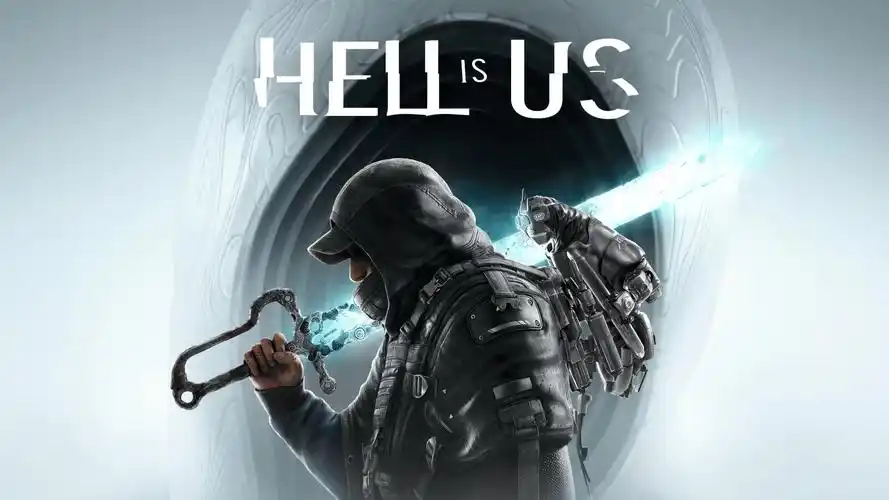
Developed by Rogue Factor and published by Nacon, Hell is Us is a third-person action-adventure game released in September 2025 for PlayStation 5, Xbox Series X|S, and PC. The game is set in the fictional war-torn country of Hadea, where the player takes on the role of Rémi, a UN peacekeeper who travels to his birthplace to search for his missing parents. What awaits him is not just a civil war, but a mysterious cataclysmic event — the appearance of supernatural creatures that cannot be killed by modern weapons. With only a drone companion and a blade from another era at his side, Rémi must navigate a hostile world that offers no maps, no quest markers, and no hand-holding.
The World and Navigation: No Map, No Markers
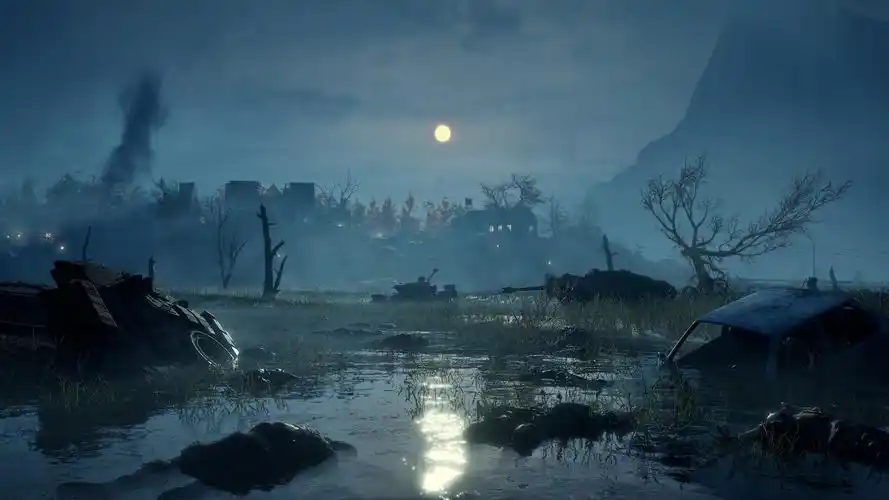
The most distinctive feature of Hell is Us is its deliberate rejection of modern open-world navigation tools. There is no map screen. There are no floating waypoints. There is no quest log telling you where to go next. Instead, players must orient themselves using environmental landmarks, NPC dialogue, and handwritten notes found throughout the world.
The game is structured as a semi-open world divided into distinct regions, each with its own visual identity. The opening area, Senedra Forest, is a densely wooded region with ruined structures that serves as a tutorial zone. From there, players travel to Jova, a village that acts as an early hub, and then to Acasa Marshes, a sprawling wetland filled with hidden paths and vertical exploration. Later regions include the mountainous Vysa Mountains, the lakeside region of Lake Cynon, and the desert expanse of Marastan.
To navigate effectively, players should pay close attention to road signs, distinctive rock formations, and the positions of visible landmarks such as radio towers and church spires. The drone, known as KAPI, can be used to scout ahead and survey terrain from a higher vantage point. Players should also make a habit of mentally mapping the position of safe houses — designated rest points where Rémi can save progress, fast travel to other safe houses, and access storage.
Combat Fundamentals: Patience Over Aggression
Combat in Hell is Us is methodical and punishing. Rémi‘s primary weapon is a blade, and the game offers several weapon types, including one-handed swords, heavy blades, and polearms. Each weapon has a light attack, a charged heavy attack, and a parry. The player also has access to a secondary ranged weapon — a spear-like projectile that can be thrown to soften enemies from a distance before closing in for melee.
The parry system is the centerpiece of combat. To parry, the player must time their block so that their weapon is positioned in front of them at the exact moment an enemy attack lands. A successful parry opens the enemy to a riposte, a powerful counterattack that deals significantly more damage than standard strikes. Some enemies can be executed outright if their health is low enough when a riposte lands.
Enemies in Hell is Us fall into two broad categories. Hollow Walkers are the most common foes — humanoid figures that fight in groups and can be parried and executed with proper timing. More dangerous are the Lymbic cord creatures, supernatural entities that emerge from glowing rifts. These creatures cannot be permanently killed until the player destroys the Time Loop Guardian that anchors them to the area. The guardian is typically indistinguishable from regular enemies, but a special tool — the Guardian Detector — is provided by an NPC named Gildas at the Watcher’s Nest, allowing players to identify the target.
Artillery Walkers are a special enemy type introduced in later regions. These ranged attackers fire explosive projectiles and summon floating bubbles that detonate when the player is at a distance. The recommended approach is to close the gap and stay in melee range, where their attacks are easier to parry. Terror Feral Walkers summon three additional enemies called Hazes at the start of combat; area-of-effect attacks such as Shriek of Terror are effective for clearing these adds quickly.
There is no traditional leveling system in Hell is Us. Instead, character progression is tied to equipment upgrades and the collection of Glyphs. Glyphs are divided into categories named after emotions — Rage, Ecstasy, Interrupt, and others — each providing a unique combat ability. For example, the Interrupt glyph fires a direct attack that stuns all enemies in its path, while Pain Spike is a ranged attack that damages enemies from a distance. Glyphs are found through exploration and puzzle-solving, and upgrading them requires collecting resources scattered throughout the world.
Healing: The Pulse Mechanic
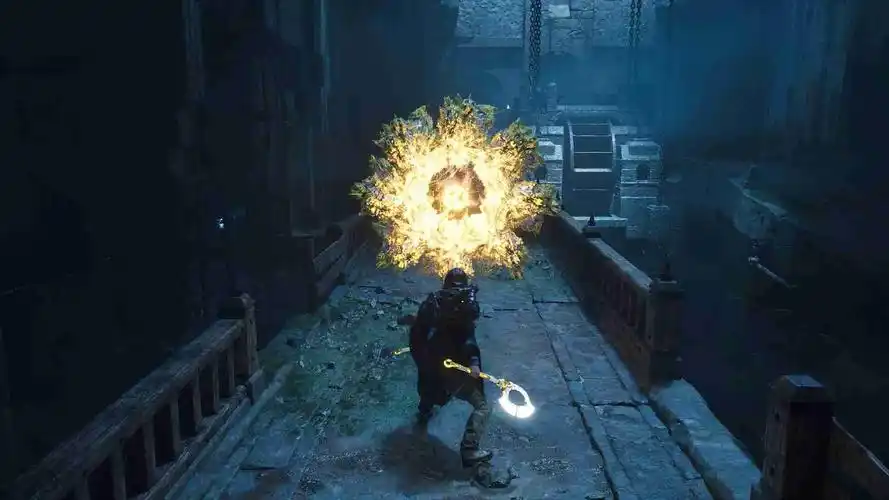
Healing in Hell is Us is not solely dependent on consumable items. The game features a Healing Pulse mechanic, which allows Rémi to restore health mid-combat without using a MedKit. To activate the Healing Pulse, the player must fill an invisible gauge by landing attacks successfully. When the gauge is full, a pulse can be triggered to restore a portion of health. This mechanic rewards aggressive play — the more the player attacks, the more healing opportunities become available. MedKits should be conserved for emergencies, particularly in boss encounters where attack windows are limited.
Exploration and Puzzles: The Real Core of the Game
While combat is a significant component, the true heart of Hell is Us lies in its exploration and puzzle-solving. The game is filled with Mysteries — environmental puzzles that require players to piece together clues from notes, environmental details, and NPC conversations. There are also Good Deeds, which are optional side objectives that often involve helping NPCs in need.
Early in the game, players encounter the Ruins Code Puzzle in Senedra Forest. To solve this, players must find the Ancient Mechanism by giving a MedKit to a wounded soldier near the ruins. The mechanism allows interaction with three stone pillars, each marked with symbols that must be rotated into the correct configuration. The solution is partially hidden on a broken plaque in a nearby room, and players must deduce the missing symbol by examining other clues in the environment.
Another early puzzle involves the Caddell Family Treasure, which introduces the game’s core puzzle logic: items found in the world are not just loot, but clues that connect to larger mysteries. The Watcher’s Nest Puzzle requires players to find Ceramic Flowers hidden in the tomb of Pentos Algae and place them in the correct order. The Temple of the Fallen Door features a pressure plate puzzle that requires careful observation of symbols and their positioning.
A key tip for puzzle-solving: KAPI, the drone, can be used to scan the environment and highlight interactive objects. If a puzzle seems unsolvable, players should check their inventory for recently acquired items and read any associated notes — the game expects players to connect dots on their own.
Progression and the Three Acts
The main story of Hell is Us is divided into three acts. In Act One, the objective is to find the Keystone of Grief and place it in the Lymbic Forge at Lake Cynon. Along the way, players should complete as many Mysteries and Good Deeds as possible in Senedra Forest and Jova, as some content becomes missable once the first keystone is placed.
Act Two is the longest section of the game and tasks the player with tracking down three additional keystones: the Keystone of Terror, the Keystone of Ecstasy, and the Keystone of Rage. Each keystone is hidden in a different region — the Senedra Forest Ruins, the Watcher’s Nest, and the Pathom Abbey in Acasa Marshes. Each region contains its own set of Mysteries, Good Deeds, and unique enemies.
Act Three narrows the focus to a single Investigation — Into the Unknown — which takes the player through Lake Cynon and into the Eye of God, where the final confrontation awaits. By this point, the player should have fully upgraded their preferred weapon and glyphs, and should have a solid grasp of the parry and riposte timing against all enemy types.
Tips for New Players
Several practical tips can make the early hours significantly smoother. First, explore thoroughly — without a map, every corner of the environment is a potential source of upgrades and clues. Second, listen to NPCs carefully; their dialogue often contains directions and hints that are not repeated. Third, do not neglect the drone — KAPI is not just a combat tool but an exploration aid that can reveal hidden paths and objectives. Fourth, complete Good Deeds as soon as they are discovered; some are time-sensitive and can be locked out after progressing the main story past certain points. Fifth, upgrade the blade early — weapon upgrades are permanent and significantly improve damage output, making combat encounters considerably more manageable.