
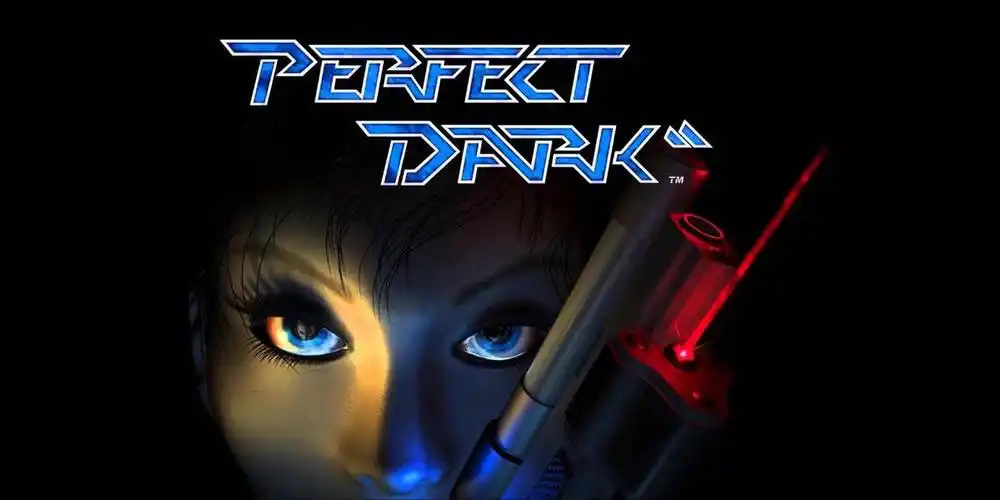
After six years of near silence following its initial teaser in 2020, the Perfect Dark reboot was fully unveiled in a dedicated showcase on July 22, 2026. The Initiative, in collaboration with Crystal Dynamics, presented ten minutes of uninterrupted gameplay that demonstrated a radical reimagining of the classic spy franchise. The game is now confirmed for release on June 18, 2027, for Xbox Series X|S, Windows PC, and PlayStation 5, and will be available on Xbox Game Pass Ultimate and PC Game Pass on day one.
Set in a near-future 2032, the game reimagines agent Joanna Dark not as a seasoned superspy but as a disgraced former MI6 operative, now working as a corporate contractor for a massive data-security firm called DataDyne. The world has been transformed by a nanotechnology called “The Grid” —a ubiquitous neural overlay developed by a rival megacorp, Core Mantis, that can manipulate human sensory perception. People can be made to see things that aren’t there, ignore things that are, or even have entire false memories implanted. The technology has been heralded as the next evolution of the internet, but during a routine data theft investigation, Joanna uncovers evidence that the Grid is being used as a covert mind-control weapon capable of creating sleeper agents who don’t know they’ve been activated.
The gameplay demo showcased a mission set in a dense, multi-story market district of Cairo. The core loop is a deep fusion of first-person shooting and immersive sim design, where player choice is not just an option but the structural foundation of every objective. The developers walked the audience through three entirely different approaches to the same mission: accessing a data vault held in a heavily guarded Core Mantis office.
The first path was a stealth traversal route. Joanna used an “Icarus Claw” grappling device to scale the exterior of the building, climbing through a tenth-story window. This path emphasized environmental navigation, hacking mini-games to disable laser grids, and non-lethal takedowns. The movement system is heavily inspired by the fluid parkour of Mirror’s Edge but grounded with a weightiness that demands precision.
The second path was a deception approach, using the Grid itself. Joanna hacked a nearby data relay to create a false security alert in a different wing of the building. Guards evacuated their posts, allowing her to walk through the front door. As she passed through the lobby, she used a “Grid Ghost” device to project a holographic decoy of herself, causing a patrolling guard to chase the phantom while she slipped into a restricted elevator.
The third path was a sabotage and combat approach. Joanna breached a side entrance by overloading a power conduit, causing a blackout that disabled the building’s automated turret systems but also attracted heavy reinforcements. The ensuing firefight demonstrated a deep weapon customization system. Joanna’s primary weapon, a silenced pistol, was shown to be modular, with real-time swapping of scopes, barrels, and ammo types. She used “Sticky Cam” rounds to scout corners and “EMP Burst” rounds to disable a riot shield guard’s armor.
The combat is brutal and fast. Health does not regenerate; Joanna must use a limited number of bio-foam injectors to heal. Melee is a last resort, with a dedicated “Struggle” system that turns close-quarters fights into a frantic, first-person physical struggle, where the player must hit button prompts to wrestle a weapon away or slam an enemy’s head against an environmental object. The demo showed Joanna shattering a coolant pipe to freeze a pursuer, then shooting a server rack to trigger an electrical explosion that wiped out a squad of reinforcements.
Between missions, the game operates from a hub-and-spoke structure. DataDyne’s London headquarters serves as Joanna’s base of operations. Here, players can accept mission briefings, upgrade their arsenal and cybernetic augmentations through a tech tree, and engage in optional conversations with NPCs that build out the world and unlock side quests. The developers showcased a firing range where Joanna can test new weapons, and a “Simulacrum” room where she can replay completed missions in a virtual reality simulation with different modifiers.
The game’s narrative unfolds across four major global locations: Cairo, Tokyo, Berlin, and an Antarctic research station. Within each location, missions can be tackled in a non-linear order, and the choices made in one mission—who you spared, what data you stole, which faction you helped—alter the state of the world in later missions. The Initiative explicitly cited Deus Ex and the 1997 original Perfect Dark as the twin pillars of their design philosophy.
Finally, the team announced an innovative asynchronous multiplayer mode called “Data Worm.” In this mode, players can invade the missions of other players, taking on the role of a Core Mantis counter-agent. As the invader, you can either choose to observe and hinder the host player subtly—erasing helpful data logs, locking doors, or marking them for patrolling guards—or engage in direct combat. The host can, in turn, set traps and use the environment to hunt the invader. This mode is a direct nod to the original game’s Counter-Operative mode but reimagined with modern immersive sim mechanics.
The reboot is a massive collaborative effort. The Initiative, located in Santa Monica, is handling creative direction, narrative, and core mechanics, while Crystal Dynamics, fresh off its restructuring under Embracer Group, is responsible for level design and combat systems. The joint team has grown to over 400 developers, making this one of the largest single projects under Xbox Game Studios. The showcase ended with the confirmation that a full playable demo will be available on the Gamescom 2026 show floor in August, marking the first hands-on opportunity for the public.