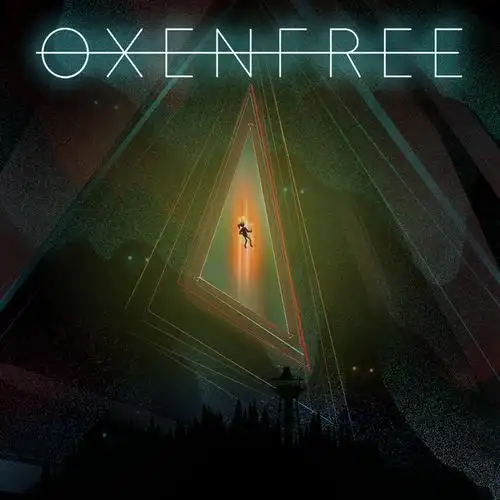
Developed by Night School Studio and published in 2016, Oxenfree is a supernatural narrative adventure that follows a group of teenagers on a seemingly innocent trip to Edwards Island, a former military outpost turned tourist destination. You play as Alex, a blue-haired high school student who brings her new stepbrother Jonas along for an overnight party with her best friend Ren and two acquaintances, Nona and Clarissa. What begins as a night of underage drinking and beach bonfires quickly unravels when Alex accidentally opens a ghostly rift using her portable radio, unleashing mysterious forces that have been trapped on the island for decades. The game unfolds in real time over the course of a single night, and every conversation you have — or choose to have — shapes the relationships between the characters and determines which of the game’s multiple endings you will see.
The Dialogue Interruption System and Relationship Development
The defining mechanic of Oxenfree is its dialogue system, which operates unlike nearly any other narrative game. Conversations flow continuously, and your dialogue choices appear in speech bubbles above Alex’s head as other characters speak. You have three options at any given moment: select a response before the other person finishes talking, wait until they are done and then respond, or say nothing at all and let the moment pass. Each of these three actions carries different narrative weight, and the game never explicitly teaches you which approach is correct — because none of them are universally correct.
Interrupting is not rude in Oxenfree; it is a legitimate conversational strategy. If you respond while someone is still speaking, Alex will talk over them, and the interrupted character will react with surprise, annoyance, or amusement depending on who they are and what the conversation is about. Interrupting Ren, Alex’s longtime best friend, often leads to playful banter because their friendship is built on overlapping chatter. Interrupting Jonas, the new stepbrother Alex barely knows, can come across as dismissive or, depending on the context, as a sign of growing closeness — you interrupt someone when you are comfortable enough with them to skip the formalities. Interrupting Clarissa, who is openly hostile to Alex from the start, almost always escalates the tension between them.
Waiting for someone to finish speaking before responding is the safest conversational approach, and it generally leads to warmer, more thoughtful exchanges. Jonas, in particular, responds well to being listened to — his relationship with Alex deepens most naturally when she gives him space to speak without jumping in. Nona, who is quiet and introspective, also appreciates being heard rather than talked over.
Saying nothing is the most underappreciated option in the game, and it is often the most powerful. Silence can be interpreted as agreement, as discomfort, as passive resistance, or as a deliberate refusal to engage. In moments of high tension, choosing to say nothing can defuse a situation that words would only worsen. In moments of vulnerability, silence can communicate more than any dialogue option. The game remembers when you choose silence, and characters will occasionally reference it later — “You got really quiet back there” — which makes the world feel responsive to your choices in subtle but meaningful ways.
A unique feature of the dialogue system is that your conversation choices in Oxenfree are not limited to the immediate scene. The game’s story involves time loops and ghostly possession, and in certain sequences, Alex can hear fragments of conversations that have not happened yet — or that happened in a previous loop. Responding to these echoes with knowledge Alex should not yet possess can unlock hidden dialogue paths and, in some cases, alter the course of the narrative.

Radio Anomalies and Collectible Frequencies
Alex’s portable radio is the central mechanical and narrative tool of the game. Tuning the radio to specific frequencies reveals hidden audio layers embedded in the island’s supernatural fabric. These transmissions include old military broadcasts, recordings of the island’s previous inhabitants, and fragments of conversations from other timelines.
There are twelve hidden radio anomalies scattered across Edwards Island, and collecting all of them is required to unlock the true ending. The anomalies are tied to specific locations and can only be accessed during certain windows of the story. For example, an anomaly near the old military communications tower is only available during the sequence when Alex and Jonas first explore the area together. If you proceed past that point without tuning to the correct frequency, the anomaly is lost for that playthrough. Another anomaly, hidden near the beach where the group first arrives, can only be accessed after the supernatural events have begun, when the environment has subtly shifted to reflect the island’s true nature.
A missable anomaly at the Adler cabin requires Alex to tune her radio while standing near a specific window, at which point she will intercept a transmission from Maggie Adler, the woman whose actions decades ago are responsible for the island’s current state. This transmission provides crucial narrative context that is not available anywhere else in the game. Another anomaly hidden in the caves near the end of the story reveals the fate of the previous group of teenagers who were trapped on the island before Alex and her friends arrived.
The radio is also used during gameplay to solve environmental puzzles — opening locked doors, disabling electronic barriers, and interacting with the ghostly entities that inhabit the island. If you are ever stuck, pulling out the radio and slowly sweeping through frequencies in the area will often reveal a hidden interaction point.
The Multiple Endings and Their Trigger Conditions
Oxenfree has several distinct endings, all determined by Alex’s relationships with her companions and her choices during the game’s climactic sequence.
The ending sequence takes place inside the ghostly rift itself. Alex is confronted by the spirits of the submarine crew who were trapped on the island decades ago. They demand to be released, but releasing them would allow them to possess Alex and her friends. The core choice Alex faces is whether to sacrifice herself to close the rift, or to allow the loop to continue, trapping herself and her friends in a repeating cycle.
If Alex has built a strong relationship with Jonas throughout the game — by being honest with him about her feelings about their parents’ marriage, by listening to him rather than talking over him, and by choosing dialogue options that treat him as an equal rather than an intruder — he will refuse to leave her side during the final confrontation. This unlocks an ending in which the two of them face the ghosts together, with Jonas’s presence giving Alex the strength to make a choice she could not make alone.
If Alex has maintained her friendship with Ren despite the chaos of the night — by being patient with his jokes, by forgiving him when his attempts at humor misfire, and by prioritizing his safety during dangerous moments — he will play a crucial role in the ending sequence, using his knowledge of the island’s history to help Alex navigate the rift.
Clarissa’s fate is a separate variable that influences the ending. Throughout the game, Clarissa is the most antagonistic member of the group, openly hostile to Alex and dismissive of the supernatural danger until it is too late. During a critical sequence in the middle of the game, Clarissa is possessed by the ghosts, and Alex must decide whether to risk her own safety to save her. If Alex chooses to save Clarissa, their relationship shifts dramatically, and Clarissa becomes an unexpected ally in the final act. If Alex abandons her, Clarissa’s fate becomes one of the game’s most haunting unanswered questions.
The true ending requires Alex to have collected all twelve radio anomalies and to have maintained positive relationships with all of her companions. In this ending, Alex finds a third option — neither sacrificing herself nor allowing the loop to continue, but breaking the cycle entirely. The details of this ending are best experienced firsthand, but it provides the closest thing to closure that the game offers.
After the credits roll, the game continues. Alex is shown in a new timeline, subtly different from the one the player just experienced. This post-credits sequence suggests that breaking the cycle is not a single act, but an ongoing process — and that the choices Alex made in one timeline echo into the next.