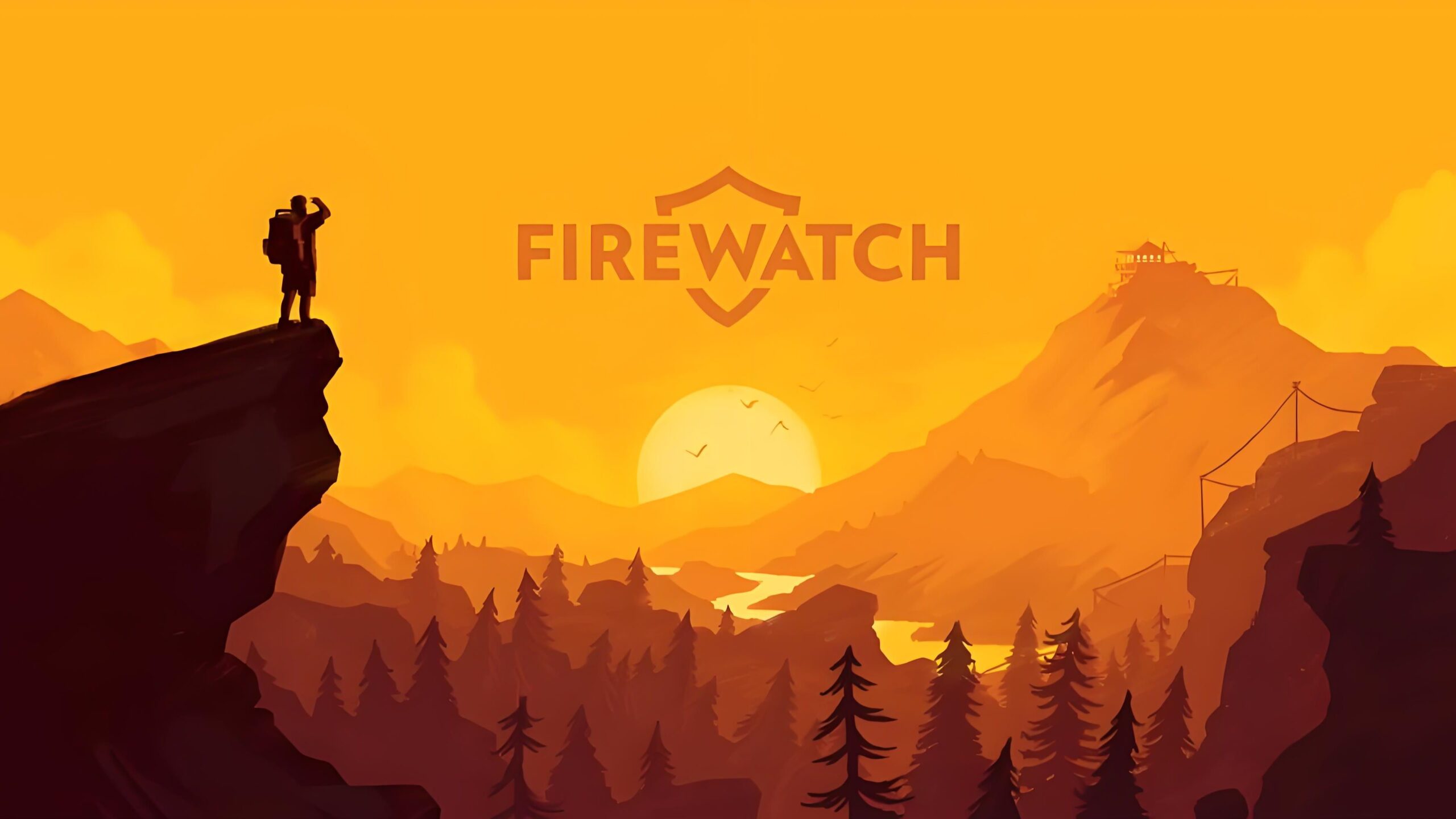
Developed by Campo Santo and published by Panic, Firewatch is a first-person narrative adventure released in 2016. Set in the Shoshone National Forest of Wyoming in 1989, the game follows Henry, a man who has taken a job as a fire lookout to escape his troubled marriage. His only human contact is Delilah, his supervisor, who communicates with him entirely through a handheld radio. Over the course of a single summer, what begins as casual banter between two colleagues deepens into a relationship that becomes the emotional core of the game. There is no combat, no fail state, and no branching paths that lead to fundamentally different endings. Instead, Firewatch builds its narrative weight through the accumulation of small choices — what you say, what you choose not to say, and how you respond when Delilah asks you the kind of questions that have no easy answers.
The Dialogue System and Relationship Development
The dialogue system in Firewatch is the primary mechanism through which the player shapes Henry’s character and his relationship with Delilah. Conversations are triggered by specific events — discovering an abandoned campsite, spotting smoke on the horizon, or simply reporting in at the end of a long day. When Henry speaks, the player is presented with timed response options, usually three, that represent different emotional registers. You can be forthcoming or evasive, compassionate or dismissive, honest or deflective. The timer is generous but finite. If you fail to choose before it runs out, Henry remains silent, which is itself a choice with consequences.
There is no visible affinity meter or relationship score. Delilah’s responses shift subtly based on the history of your interactions. If you have been consistently open with her, she will share more about her own past — her failed relationships, her reasons for spending every summer alone in the wilderness, her complicated feelings about the life she has chosen. If you have been guarded, she will mirror that distance, and their conversations will remain professional rather than personal. The game never explicitly rewards or punishes either approach. It simply shows you a different version of the same relationship.
Several key conversations function as narrative hinges. Early in the game, Delilah asks Henry why he took the job. Your answer — whether you tell her about your wife, Julia, and her early-onset dementia, or deflect with a joke about wanting to escape people — sets the tone for the entire summer. If you tell her the truth, she responds with genuine sympathy and a vulnerability that deepens their bond. If you deflect, she respects your privacy but keeps a certain distance that never fully closes.
Another critical exchange occurs midway through the summer, when Henry and Delilah discuss the possibility of meeting in person. The conversation is charged with unspoken tension. Delilah is flirty but evasive, and Henry can press the issue or let it drop. There is no correct answer here. Pressing too hard can make Delilah uncomfortable. Letting it drop can leave Henry wondering what might have been. This ambiguity is central to the game’s emotional design — Firewatch is not a romance, and it never offers the player the satisfaction of a clear resolution to the question of what Henry and Delilah mean to each other.

Environmental Storytelling and Hidden Details
The Shoshone National Forest is not merely a backdrop. It is an active participant in the story, filled with environmental details that enrich and complicate the central narrative. Henry’s tower, Two Forks Lookout, contains scattered personal effects that fill in the gaps of his backstory — a copy of a book he was reading to Julia before she no longer recognized him, a letter from her care facility that he has read so many times the paper has softened at the folds.
The forest itself is dotted with caches, abandoned camps, and notes left by previous lookouts. These items are optional discoveries, but they deepen the player’s understanding of the world Henry has entered. A series of notes left by a former lookout named Ron reveals a man who grew increasingly paranoid and isolated, eventually abandoning his post. The parallels to Henry’s own situation are unmistakable, and the player is left to decide whether Ron’s story is a warning or simply a coincidence.
The game’s central mystery — a conspiracy involving missing teenage girls, a fenced-off research station, and a shadowy figure who may or may not be watching Henry — is ultimately revealed to be something far more mundane and tragic than either Henry or the player expects. The resolution of this mystery, which I will not fully spoil here, reframes the entire summer as a story about two lonely people who allowed their imaginations to run away with them because the alternative — confronting the mundane reality of their own lives — was too painful.
One of the most thematically rich hidden details is the disposable camera Henry can find early in the game. He can use it to take photographs at any time, and the photos are developed during the ending credits. What you chose to photograph — the sunsets, the wildlife, the evidence of the conspiracy, or nothing at all — becomes a final, wordless statement about what the summer meant to Henry. Players who took no photographs see a blank roll. Players who took many see a visual diary of their journey. It is a small touch, but it is emblematic of the game’s philosophy: the meaning of the experience is in what you chose to pay attention to.
Interpreting the Ending
The ending of Firewatch is deliberately, almost aggressively, anticlimactic. Henry and Delilah do not meet. The conspiracy turns out to be a tragic accident, not a grand cover-up. The summer ends, and Henry is evacuated by helicopter while Delilah remains at her post. Their final radio conversation is brief, tender, and utterly unresolved.
This ending has been divisive among players, and that divisiveness is itself the point. Firewatch is a game about escapism — about the stories we tell ourselves to avoid facing the things we cannot change. Henry came to the forest to escape his wife’s illness and his own guilt. Delilah came to escape a string of failed relationships and a life that never turned out the way she wanted. Together, they constructed a fantasy — of a mystery, of each other, of a possible future — that could not survive contact with reality. The ending refuses to give them, or the player, the catharsis of a romantic reunion or a dramatic confrontation. Instead, it forces Henry to return to his real life, to Julia, to the hard choices he has been avoiding all summer.
Whether this ending feels satisfying or frustrating depends on what the player invested in. If you came for the mystery, you may feel cheated. If you came for the relationship, you may feel heartbroken. If you came for the escape, you may feel exactly what Henry feels — a quiet, reluctant acceptance that the real world is still waiting, and always was.