
I. Game Version & Play Order
The Witcher 3: Complete Edition includes the base game, Hearts of Stone DLC, and Blood and Wine DLC. The Next-Gen Update is a free upgrade, supporting Chinese voice acting, ray tracing, and optimized graphics.Recommended play order: Complete the main story and important side quests of the base game → Play Hearts of Stone → Finally play Blood and Wine. Blood and Wine is designed for higher-level characters with greater overall difficulty and content, best experienced late-game.

II. School Gear & Gwent
(I) School Gear
1. Cat School Gear: High critical hit chance, high attack speed, suitable for agile fast attack builds.
Bear School Gear: High defense, high health, suitable for tanky frontline playstyles.
2. Griffin School Gear: High Sign intensity, suitable for Sign-focused builds.
3. Wolf School Gear: Well-rounded and balanced, suitable for mixed playstyles.
4. Mastercrafted Gear can only be crafted in the Blood and Wine DLC.
(II) Gwent
Gwent is a standalone in-game card game. Cards can be obtained through quests, purchasing, and defeating NPCs.The full-collection achievement requires acquiring a certain number of unique base-game cards; DLC cards do not count.Some powerful cards can only be obtained through key quests, so it is recommended not to skip playing Gwent against NPCs when encountered.
III. Basic Gameplay & Core Mechanics
(I) Weapon & Enemy Matching
1. Steel Sword: Used against humans, common beasts, and other non-monster enemies.
2. Silver Sword: Used against wraiths, vampires, nekkers, griffins, and other supernatural monsters.
3. Weapons only deal reduced damage when degraded and never break completely. Repairs can be delayed if short on crowns.
(II) Sign Usage
1. Quen Sign: Creates a shield to absorb damage, the most important survival Sign on higher difficulties.
2. Igni Sign: Releases fire to burn enemies; highly effective against ghouls, drowners, and Wild Hunt soldiers.
3. Aard Sign: Releases a concussive wave to interrupt attacks and knock back enemies; effective against heavily armored foes and large monsters.
4. Yrden Sign: Places a magical trap to restrict movement of wraith-type enemies.
5. Axii Sign: Temporarily charms human enemies; can avoid combat entirely in certain dialogues.
(III) Alchemy System
Potions provide short-term combat buffs and can be used as long as Toxicity remains under the limit; Meditation replenishes their uses.Decoctions are long-lasting buffs with stronger effects but higher Toxicity, ideal for targeted use.Sword Oils applied to blades increase damage against specific enemy types.Bombs are mostly used for crowd control and area damage — for example, Moon Dust immobilizes wraiths, and Dancing Star works well against groups.
(IV) Meditation
Meditation restores health, replenishes most potion and bomb uses, and adjusts the in-game time.Meditation can only be used in safe areas and is unavailable during combat.
IV. Main Quest Progression by Region
1. White Orchard (Beginner Area)
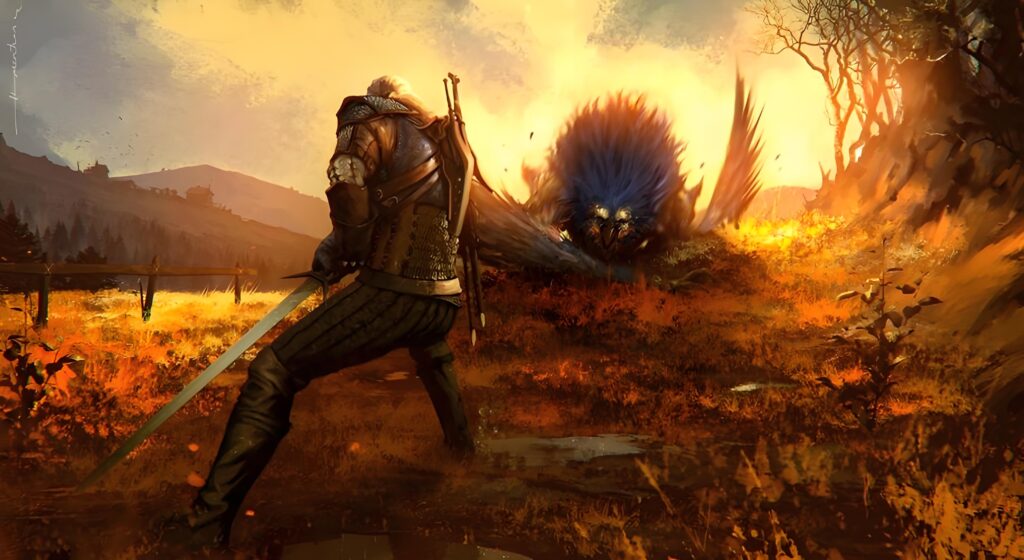
Recommended level: 1–10.Main quests: The Beast of White Orchard, Lilac and Gooseberries, etc.This area focuses on learning controls, Signs, Witcher Senses, and basic combat. Diagrams for basic Griffin School Gear can be collected here.
2. VelenRecommended level: 10–25.Main quests include Novigrad On Fire, Get Junior, and other key missions.Core side quest: The Bloody Baron — choices here directly affect the fates of multiple NPCs.Velen has an overall grim atmosphere, with many morally ambiguous quests and no truly perfect outcomes.
3. NovigradRecommended level: 25–35.The largest city in The Witcher 3. Main story involves crime syndicates, witch hunters, and the persecution of magic.Many of Triss’s side quests take place here; it is also a major area for Gwent card collection.The city has dense quests, making hidden dialogue and rewards easy to miss.
4. Skellige IslesRecommended level: 35–45.Main story focuses on civil war among island clans, the Sunstone, time travel, and related events.The Battle of Kaer Morhen takes place around this section and is one of the emotional climaxes of the base game.Many Bear School Gear diagrams are found here, ideal for tank builds.
5. Final BattleRecommended level: 45+.Main quests: Preparations, Blood on the Battlefield, The Last Wish, The Final Trial.Before facing Eredin, it is recommended to prepare high-level Sword Oils, Potions, and Bombs, and keep Quen Sign active at all times.Final choices directly determine Ciri’s ending and the fate of the world.
V. Key Ending Choices (Official Canon Conditions)
1. Ciri’s Ending (Most Important)
Ciri’s survival depends on supporting and accompanying her during key story moments, often called “creating good memories.”At least three correct choices must be made for Ciri to survive; insufficient correct choices result in Ciri’s death.Common correct choices include: comforting Ciri to let her vent, fighting alongside her, respecting her decisions, and not forcing her to meet the Emperor.Taking Ciri to meet the Emperor during Blood on the Battlefield makes her more likely to become Empress; refusing makes her more likely to become a Witcher.
2. Geralt’s Romance Ending
Yennefer: Remain loyal to Yennefer, complete The Last Wish to confirm your bond, and avoid pursuing Triss.
Triss: Complete Triss-related side quests, convince her to stay during Now or Never, and avoid deepening relations with Yennefer.
Romancing both will result in both leaving Geralt, leaving him alone.
3. Northern Kingdoms Ending
Completing Blindly Just, The King’s Gambit, and related quests allows you to assassinate Radovid and change Northern politics.If these quests are ignored, Radovid will unite the North, and Nilfgaard’s influence will shift accordingly.There are many branching endings; they do not affect Ciri’s core fate but alter epilogue descriptions.
VI. DLC Content Guide
(I) Hearts of Stone
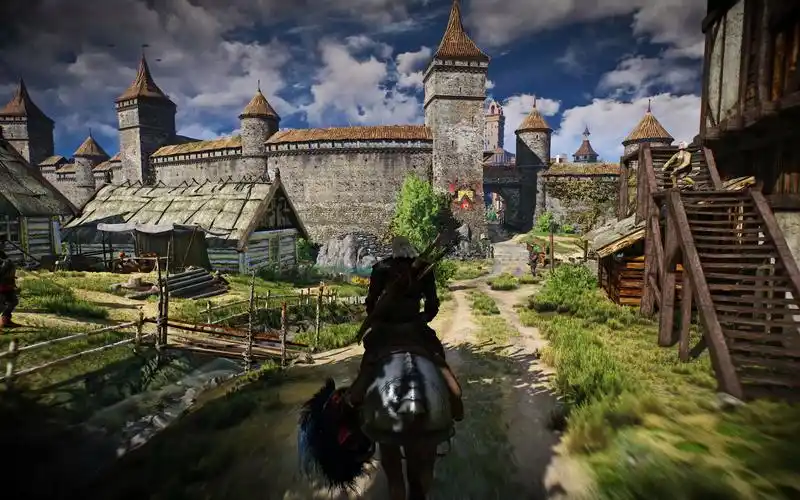
Recommended level: 30+.Main story revolves around contracts with Gaunter O’Dimm (the Mirror Master) and the wishes of Olgierd von Everec.Tightly paced, dark, and full of twists. Gaunter O’Dimm is a critically important character in The Witcher lore.Completion rewards include powerful weapons, high-tier runes, and exclusive Gwent cards.Shani is a DLC-exclusive character; interactions with her do not affect the base-game romance.
(II) Blood and Wine
Recommended level: 40+.Set in Toussaint, a scenic region widely regarded as the true perfect ending of The Witcher 3.Main story revolves around The Beast of Toussaint and political intrigue within the duchy.Unlocks a vineyard estate, Mastercrafted Witcher Gear, and an all-new Mutations system.The overall tone is warmer and more relaxed, making it ideal for concluding the game.
VII. Practical Tips for Higher Difficulties
On higher difficulties, avoid direct combat; prioritize using Quen Sign for survival.Check the Bestiary before battle, apply corresponding Sword Oils, and use targeted Potions and Bombs.Dodging is safer than blocking; use positioning to draw and separate enemies.Alchemy builds are extremely powerful on higher difficulties; prioritize talents that increase Toxicity limit and potion bonuses.Do not challenge overleveled enemies — level suppression drastically reduces your damage output.
VIII. Common Mistakes & Pitfalls to Avoid
Always save before critical story choices, as most branches are irreversible.Do not pursue both Triss and Yennefer romantically, as you will end up alone.Do not neglect the Alchemy system; pure melee combat becomes extremely difficult on higher difficulties.Do not sell quest items, as some are required for later stages.The Mutations system in Blood and Wine is extremely powerful; prioritize unlocking it in the late game.