
Developed by Supergiant Games and officially released in 2020 after an Early Access period, Hades is a roguelite action dungeon-crawler that casts you as Zagreus, the rebellious son of Hades, as he fights his way out of the Underworld to find his long-lost mother, Persephone. Every escape attempt takes you through a series of randomized chambers filled with enemies, traps, and Olympian gods who offer their aid. Death sends you back to the House of Hades, but rather than losing everything, you are encouraged to grow stronger through permanent upgrades, deepen your relationships with a cast of beautifully written characters, and piece together the mystery of your fractured family. The game holds a 93 on Metacritic and has been celebrated as one of the finest roguelites ever made. This guide will help you get your first clear and point you toward the true ending.
Core Mechanics: The Loop of Life and Death
A run in Hades takes you through four main biomes: Tartarus, Asphodel, Elysium, and the Temple of Styx. Each biome consists of a series of encounter rooms with a boss at the end. You fight using one of six Infernal Arms, and the Olympian gods — Zeus, Poseidon, Athena, and others — grant you Boons that modify your attacks and abilities. Between rooms, you collect Darkness, Gemstones, Keys, Nectar, and other resources. When you die, you return to the House of Hades, where you can spend those resources on permanent upgrades before starting your next escape.
The Mirror of Night in Zagreus’s bedroom is your primary upgrade station. Early on, prioritize the upgrades that grant you extra dashes, increased maximum health, and Death Defiance, which gives you extra lives per run. The talent Privileged Status is exceptionally powerful: it causes enemies afflicted by two or more status effects to take extra damage, and it synergizes with nearly every build. Other Mirror talents like Thick Skin and Boiling Blood are equally valuable early investments.
Keepsakes are trinkets given to you by each character when you offer them Nectar for the first time. You can equip one Keepsake per biome, and they are the most reliable way to influence your build. The Keepsake from a god guarantees that the next Boon you find will be from that god. For example, equipping Athena’s Owl Pendant at the start of a run ensures your first Boon will be Athena’s Divine Dash, one of the most valuable defensive tools in the game. Later, the Lucky Tooth from Skelly grants an extra use of Death Defiance, and the Acorn from Eurydice nullifies the first few hits of a boss fight. Use Keepsakes strategically: start with a god’s Keepsake to secure a core Boon, then switch to a defensive Keepsake before a boss biome.
Weapon Aspects and Playstyle Selection
The six Infernal Arms can all be upgraded with Titan Blood to unlock and enhance their Aspects, alternate forms that dramatically alter how the weapon plays. Titan Blood is scarce early on, earned only by defeating bosses with a weapon for the first time, so you should invest it carefully.
The Stygian Blade, the starting sword, has an Aspect called Aspect of Nemesis that causes your special attack to deal bonus damage for a short duration. This aspect rewards weaving specials into your combo and is a solid, straightforward choice for beginners.
The Eternal Spear‘s Aspect of Achilles allows you to throw the spear and then rush to its location, empowering your next few attacks. This mobility tool is incredibly useful for both offense and defense, and it works well with cast-focused builds.
The Shield of Chaos‘s Aspect of Chaos throws multiple shields after a Bull Rush, an excellent choice for safe, ranged play. Its block is also invaluable for learning boss patterns without taking damage.
The Heart-Seeking Bow has the Aspect of Chiron, which automatically targets the last enemy hit with a volley of special arrows. This is one of the strongest aspects in the game and is very forgiving for new players, as it allows you to focus on dodging while your special automatically homes in.
The Twin Fists of Malphon‘s Aspect of Talos magnetically pulls enemies toward you with its special, making it easier to group foes together for area damage.
The Adamant Rail‘s Aspect of Eris empowers you if you stand in the blast of your own special, providing a significant damage buff. This weapon plays more like a shooter, and if you enjoy keeping distance, it is a strong option.
When you first start, focus on unlocking each weapon’s base Aspect and trying them out. Once you find a weapon you enjoy, invest Titan Blood into a single Aspect to increase its effectiveness. The Aspect of Chiron on the Bow and the Aspect of Chaos on the Shield are widely considered the most beginner-friendly for consistent clears.
Boon Synergies and Build Crafting
Boon selection is where runs become unique. Each god specializes in certain effects. Zeus adds chain lightning to your attacks. Poseidon knocks enemies back and deals bonus damage when they slam into walls. Athena provides deflection and damage reduction. Aphrodite inflicts Weak, reducing enemy damage output. Artemis grants critical hits. Ares applies Doom, a delayed burst of damage. Dionysus inflicts Hangover, a stacking damage-over-time effect. Demeter applies Chill, slowing enemies.
A successful build relies on synergy. For example, if you are using the Bow with Aspect of Chiron, your special rapidly fires multiple arrows. Pair that with Dionysus on special to stack Hangover quickly, then add Aphrodite on attack to apply Weak. This gives you two status effects, which activates the Privileged Status Mirror talent for a massive damage boost. Add a Duo Boon like Low Tolerance (Dionysus + Aphrodite), which increases the maximum Hangover stacks on Weak enemies, and your damage output becomes devastating.
Another powerful synergy is the Merciful End Duo Boon (Athena + Ares). This causes your attacks that deflect, such as Athena’s Dash, to instantly trigger Doom effects. Paired with fast-hitting weapons like the Twin Fists, this can melt bosses.
Always check the Codex in the House of Hades to see which Boons each god offers and what Duo Boons are available. The game tracks all of this, and the more you play, the more you will understand which combinations work well together. The Fated List of Minor Prophecies also rewards you for completing specific objectives, including trying out various Boons.
Boss Strategies
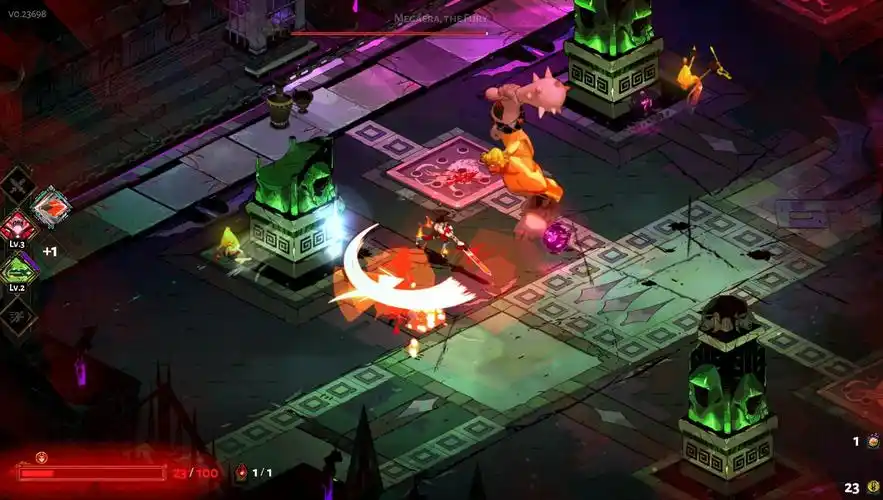
The Furies (Tartarus): Megaera, Alecto, and Tisiphone each have distinct patterns. Megaera is the most common first boss. She attacks with lunges, projectile barrages, and area denial circles. Stay mobile and dash through her attacks. The circles can be dodged through or simply avoided by standing outside them. Alecto is more aggressive and will build up a rage meter; when it fills, she becomes faster. Tisiphone is the most unpredictable but has clear tells. Generally, focus on dodging, landing a few hits, and using your Cast to get the Boiling Blood damage bonus.
Bone Hydra (Asphodel): This fight takes place on a platform surrounded by lava. The Hydra has multiple heads that attack independently. Focus on the main head first, using your dash to avoid the projectile waves. The additional heads that spawn can be ignored or killed quickly for safety. Athena’s Divine Dash makes this fight significantly easier by deflecting all projectiles.
Theseus and Asterius (Elysium): The game’s most challenging boss for new players. Theseus uses a spear and shield, blocking frontal attacks, while Asterius charges at you with massive swings. Prioritize Asterius first. His charge is telegraphed, and you can dash through it. After he falls, Theseus will call on an Olympian god for random area-of-effect attacks. Lure him away from the center and attack from behind when he finishes a combo. His shield block means you need to hit his back or use piercing attacks. This fight is about patience; do not get greedy.
Hades (Temple of Styx): The final boss has two phases. In the first, Hades attacks with sweeping spear strikes, skull projectiles that spawn enemies if they land, and a spin attack. Destroy the skulls before they fully materialize. In the second phase, Hades gains new fire attacks and summons waves of enemies from the Underworld. Use your Companion summons (if unlocked) for extra burst damage. The key is to stay close to Hades; his ranged attacks are more dangerous than his melee. Greater Call from a god like Zeus or Artemis can deal massive damage if fully charged.
Relationships and the True Ending
Nectar is used to build relationships. Give one Nectar to each character you meet — first gifts always yield a Keepsake. After the first Nectar, further gifts require Ambrosia, which is rarer and obtained from completing runs. Deepening relationships with the Olympian gods and the residents of the House unlocks side quests, new dialogue, and eventually the true ending.
The true ending, or Epilogue, requires you to have completed the main story by reaching Persephone multiple times, to have maxed out your relationship with most of the Olympians, and to have invited them to a feast. This triggers a final sequence that resolves the story’s central conflict and brings closure to the family. There is no single point where you trigger it; it is the culmination of many conversations and gift-giving sessions. For a first-time player, simply keep playing, talk to everyone, and give Nectar to every character you meet. The story will unfold naturally.