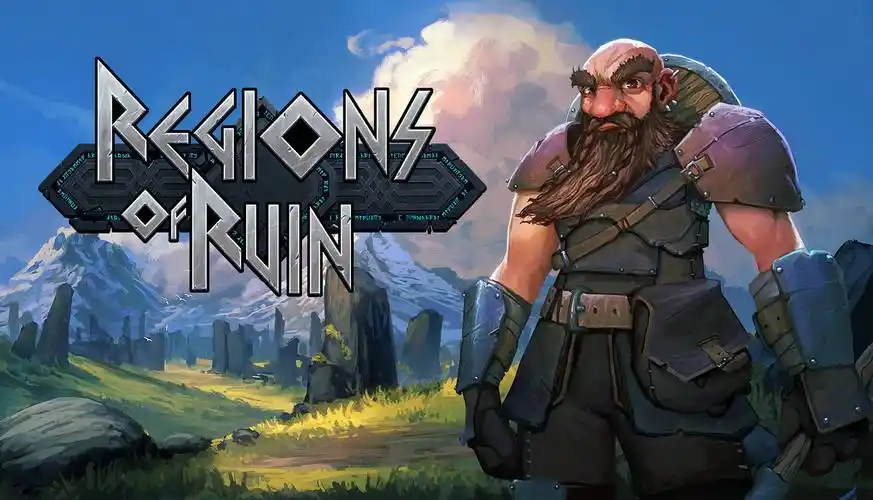
Developed by Gameclaw Studio and published by Raw Fury, Regions of Ruin: Runegate officially launched on Steam on April 14, 2026. This title is not an entirely new IP, but rather a full remaster and content expansion of the original Regions of Ruin, which was released in 2020. Compared to the original, the remastered edition has received substantial upgrades across multiple dimensions: the visuals have been completely overhauled, a system allowing players to recruit up to three AI companions has been introduced, eight companion classes have been added, and a brand-new Runegate magical teleportation network is now available. The game imposes no artificial time constraints, allowing players to explore its expansive open world at their own pace. You take on the role of a customisable dwarven hero, searching a devastated continent for scattered dwarven kin, repelling goblins and various monsters, gathering resources, and rebuilding dwarven civilisation upon the ruins.
Basic Controls and Core Combat Mechanics
For first-time players, familiarising yourself with the controls is the initial step. The game supports both keyboard and controller, with the following core key bindings: WASD controls movement and jumping, Space is used to Dash, E interacts with NPCs or objects, C enters Stealth mode, and Q quickly uses items to heal from the inventory. Left Click performs a Light Attack/Quick Attack, Right Click performs a Heavy Attack/Power Attack, the Down Arrow key or LB is used to Guard, and the Up Arrow key or LT is used to throw ranged weapons such as axes, spears, crossbow bolts, or firearms.
Dashing is the most critical action mechanic in the game — while dashing, the character benefits from invulnerability frames and can even perform the dash in mid-air. This piece of information is vital for newcomers: in the early game, before your equipment is fully developed, you are not obligated to fight every dense pack of enemies you encounter. You can use the dash’s invulnerability frames to pass directly through dangerous zones and first scavenge the treasure chests behind them or rescue trapped dwarves. Better equipment and a higher population base will yield far greater benefits in the opening hours than killing a few extra trash mobs.
The core logic of the combat system is built upon a guard-breaking mechanic. Ordinary enemies can be quickly dispatched with a flurry of light attacks, but when facing enemies wielding shields or heavy armour, the poise damage dealt by light attacks is very low. In these situations, you need to use a Heavy Attack (Right Click) to break the enemy’s defensive stance and inflict a stun. An efficient general-purpose combo strategy is as follows: first use Guard (Down Arrow / LB) to block the enemy’s initial round of attacks, then counterattack during the enemy’s recovery animation to knock them into a brief stagger, follow up with a heavy attack to break their guard, and then switch back to light attacks to rapidly deplete their health. Prioritise unlocking the “Unblockable Light Attacks” node in the skill tree, as this allows you to deal damage to shield-bearing enemies without needing to break their guard first, significantly improving the pacing of area progression in the early game.
Skill point investment can be broadly divided into four specialisation paths: a Tank path (focused on defence, health, and shield bashing), a Two-Handed Berserker path (focused on stacking bleed effects and high burst damage), a Stealth/Assassination path (using sneak attacks from stealth to deal multiplied damage), and a Ranged path (focused on precise shots with crossbows/firearms and thrown projectiles). New players are advised to prioritise deep investment in a single path rather than attempting to progress all four simultaneously. Skill points are extremely limited in the early game, and the returns from fully specialising in one path are far greater than those from dabbling across multiple paths.
Camp Construction and Resource Management
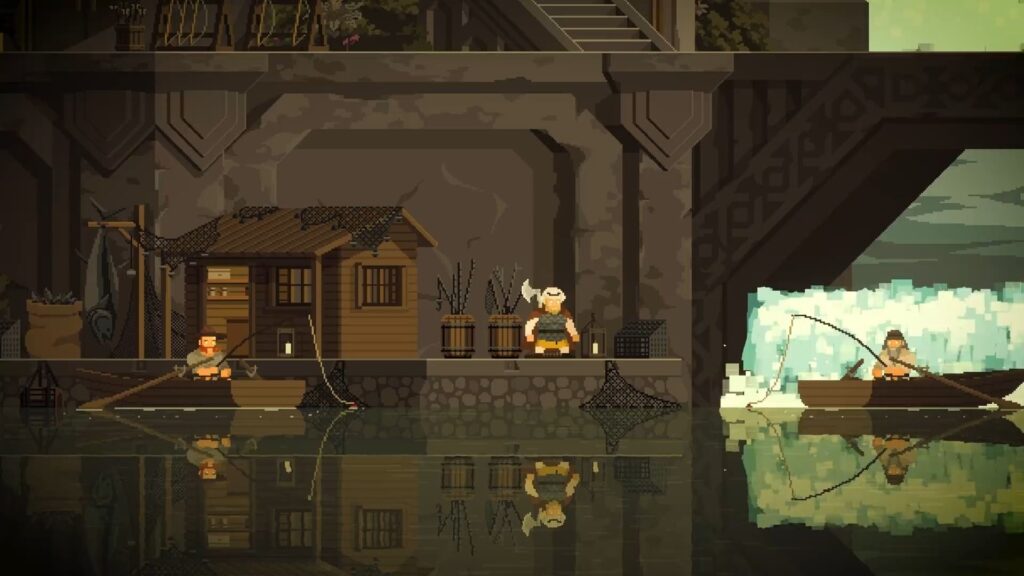
The camp system is a core feature that distinguishes Runegate from standard action RPGs. At the start of the game, the settlement you occupy is a pile of ruins. You need to gradually rescue dwarven refugees scattered across the map and bring them back to camp. Each rescued dwarf can be assigned to a different profession, including Gatherer, Builder, Blacksmith, and others.
There is a clear priority order for upgrading camp buildings. The Blacksmith and the Town Hall are the two buildings most worthy of your initial resource investment: upgrading the Blacksmith unlocks the ability to craft higher-tier weapons and armour, while upgrading the Town Hall directly affects the maximum dwarven population capacity as well as the number of companions you can recruit. Other buildings such as the Apothecary Workshop, Kitchen, and Trading Post can be gradually added after the Blacksmith and Town Hall have reached a certain level. It is important to note that recruiting certain key NPCs requires completing specific prerequisite quests. For example, to get Zanj to join your camp, you need to complete all resistance faction quests, help them relocate to their new base, and exhaust all dialogue options with her.
Resource distribution is strongly correlated with map regions. Forest regions yield large quantities of wood and basic ores, while mountain regions primarily contain rare ores and gemstones. Every map requires a certain amount of food to be consumed in order to unlock access, so maintaining a stable food supply is a fundamental prerequisite for continuous progression. If, during exploration, you discover that a particular region has high food consumption but unsatisfactory yields, you can fall back to a lower-level region to gather a fresh batch of resources before pushing forward again. If you are aiming for full completion, keep an eye out for hidden cats, beverages, companion recruitment opportunities, and Thrumgr’s notes — all of these are tied to the in-game “Collector” achievement.
Companion System
The companion system is one of the most significant upgrades in this remastered edition. Players can recruit up to three AI companions, chosen from eight available classes. For newcomers, a relatively safe early-game party composition is: one tank-type frontliner (Defensive Warrior) plus one ranged damage dealer (Archer or Mage) plus one flexible filler (Rogue or Healer). The tank holds enemy attention, the ranged unit deals damage safely from the backline, and the rogue uses stealth to assassinate high-threat targets — this iron triangle composition can handle nearly all scenarios encountered during the main story playthrough. Companions fight automatically and adjust their positioning based on your actions, allowing you to focus on your own damage output or ranged support.
In terms of actual combat performance, the companion AI will not perform dazzling micromanagement, but it generally manages to avoid self-destructive behaviour. Tank-type companions block with relatively high frequency and can reliably absorb frontline pressure. Mage-type companions will continuously unleash spells from a safe distance. If you personally choose to follow the stealth path, it is recommended to maximise the tank configuration in your party — because characters on the stealth path are relatively fragile in direct confrontations, and a competent tank serves as the lifeline of the entire squad.
Exploration Rhythm and Important Notes
One of the most comforting design philosophies of Runegate is its dissolution of exploration pressure. The game features no countdown timers, no mandatory main quest deadlines, and no side content that is permanently missable. You can spend over a dozen hours in the first region repeatedly fighting enemies, accumulating resources, and upgrading your camp, and then leisurely advance the plot — the game will not punish you for taking your time.
However, this does not mean you can proceed without any thought regarding your exploration direction. Runegates serve as the game’s fast-travel nodes; unlocking a new Runegate is equivalent to planting a teleportation flag in the current region. Whenever you enter a new area, prioritise locating and activating the Runegate to significantly reduce subsequent travel time. Furthermore, each handcrafted region hides a certain number of side quests, puzzle elements, and rescuable dwarves. It is recommended to sweep through every visible corner before defeating the area boss. The main story itself is not particularly long, but a large volume of high-quality side content fills the bulk of the game’s total playtime.